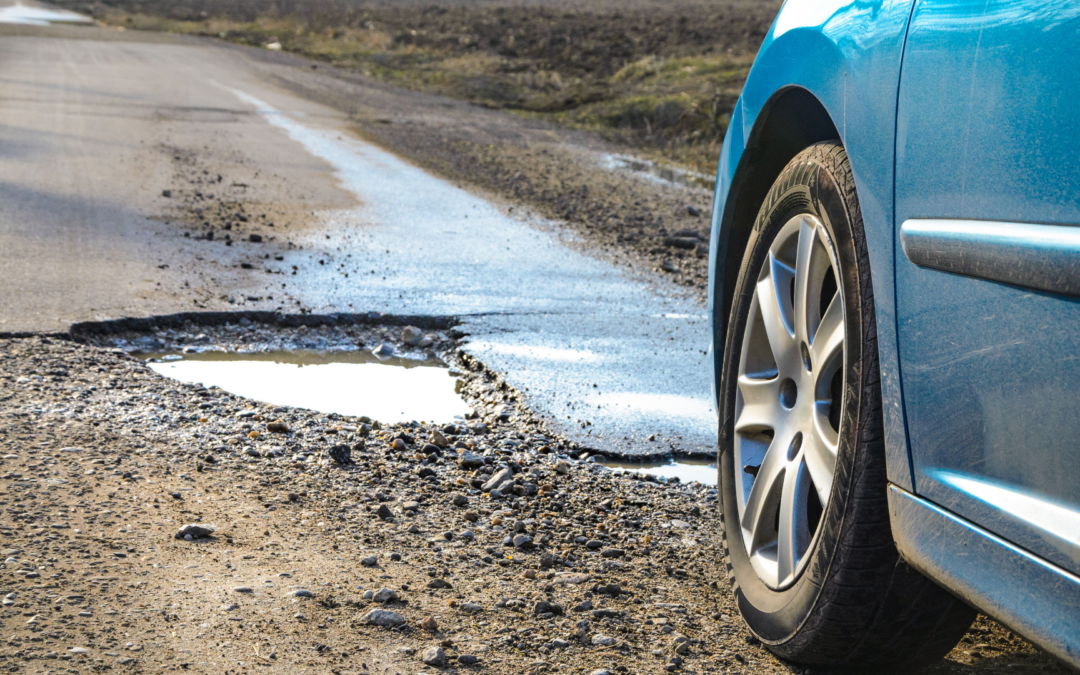
Most drivers have experienced it at some point. You’re driving along normally when suddenly you hit a pothole. Sometimes it’s unavoidable. Other times, it’s hidden by rainwater or appears too late to avoid safely. The impact may seem minor at first, and you continue driving without giving it much thought.
Then, over the next few miles or days, something feels different. Maybe the steering wheel is slightly off-center. Perhaps the vehicle pulls to one side. You might notice a new vibration, unusual tire wear, or a feeling that the car simply doesn’t handle the way it used to.
While not every pothole causes damage, significant impacts can affect several important systems within your vehicle. Understanding what happens during a pothole strike can help you recognize warning signs early and prevent more expensive repairs down the road.

What Happens When You Hit a Pothole?
When a tire drops into a pothole, the impact force travels through the wheel, tire, suspension, steering system, and even parts of the vehicle’s frame. Modern suspension systems are designed to absorb bumps and imperfections in the road, but they have limits. A deep pothole or impact at higher speeds can generate enough force to damage components that are critical to vehicle handling and safety.
In many cases, the damage isn’t immediately visible. The vehicle may still drive normally, making it easy to assume everything is fine. However, even a slight bend or alignment change can gradually create larger problems over time.
Alignment Problems Are One of the Most Common Results
One of the first things technicians check after a pothole impact is wheel alignment. Your vehicle’s alignment determines how the wheels contact the road and track while driving. Even a relatively small impact can alter alignment angles enough to affect steering and tire wear.
Signs that your alignment may have been affected include:
- The vehicle pulls to one side
- The steering wheel is no longer centered
- Uneven tire wear begins to appear
- Steering feels less precise than before
Sometimes alignment changes happen gradually after an impact, making the connection less obvious. Drivers often notice the symptoms weeks later without realizing they originated from a pothole strike. Statistically, independent studies published by AAA (American Automobile Association) indicate that pothole damage costs U.S. drivers billions annually, with structural wheel misalignment being the primary hidden driver of premature tire failure.

Suspension and Tire Damage Isn’t Always Visible
The suspension system absorbs tremendous forces every time you drive. Components such as control arms, ball joints, bushings, struts, and shocks are built to withstand normal road conditions, but severe impacts can accelerate wear or cause direct damage.
A bent suspension component doesn’t always create dramatic symptoms right away. Instead, the vehicle may feel slightly different, requiring small steering corrections or feeling less stable at higher speeds. Over time, these small changes can become more noticeable as additional wear develops. Drivers may experience increased road noise, a rougher ride quality, or a feeling that the vehicle no longer feels as smooth and controlled as it once did. To isolate these components safely, a dedicated vehicle diagnostics process is often necessary.
Tires often absorb the majority of the force during a pothole strike. In some situations, the damage is obvious. A tire may lose air immediately or develop a visible bulge along the sidewall. Other times, the damage occurs internally and remains hidden until symptoms begin to appear later. Internal belt damage can create steering wheel vibration, uneven tire wear, highway-speed shaking, and reduced ride comfort.
According to technical bulletins from the U.S. Tire Manufacturers Association (USTMA), internal structural bruising or steel belt separation from impact cannot be seen on the outside but will severely compromise highway safety over time. Because internal tire damage isn’t always visible, getting comprehensive auto inspections after a significant hit is highly recommended.

Steering Components and Long-Term Impact
Your steering system relies on precise alignment and properly functioning components to keep the vehicle traveling straight. A pothole impact can place sudden stress on steering components such as tie rods, steering linkages, and steering racks. Even minor damage can alter steering feel and responsiveness. Many drivers notice symptoms such as increased steering effort, a loose steering feel, wandering while driving, or a steering wheel that sits off-center.
These issues may seem minor at first but can gradually worsen if the underlying problem is not corrected. One reason pothole damage should never be ignored is that seemingly minor issues often create additional wear throughout the vehicle. For example, a small alignment change can cause tires to wear unevenly. Worn tires place additional strain on suspension components. Suspension wear can then affect braking capabilities, calling for specialized brake and alignment repair to restore factory safety levels.
Consumer safety data compiled by Consumer Reports emphasizes that putting off an inspection after a severe road impact converts a cheap, routine tracking adjustment into an expansive multi-component mechanical overhaul weeks down the line. Addressing problems early is always the most cost-effective approach.
Why Professional Inspections Matter
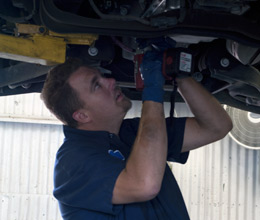
Not all pothole damage is obvious. A vehicle may continue driving normally while hidden problems develop beneath the surface. This is why professional inspections are so valuable after a significant impact. At All Around Auto Repair, technicians inspect wheel alignment, tires and wheels, suspension components, steering system parts, and overall vehicle handling characteristics.
While it’s impossible to avoid every pothole, paying attention to changes in your vehicle afterward can help prevent long-term damage. If you notice unusual vibrations, pulling, steering changes, tire wear, or handling differences following an impact, don’t assume the problem will resolve itself.
A pothole may seem like a minor inconvenience, but the forces involved can affect your tires, suspension, steering, and alignment. If your vehicle feels different after hitting a pothole, even if the change seems subtle, it’s worth having it inspected. Catching alignment or suspension issues early can help protect your tires, improve safety, and prevent more expensive repairs in the future.
If you’ve recently hit a pothole and your vehicle doesn’t feel quite right, our experienced technicians are here to help.
To have our team run a professional chassis safety analysis, please contact All Around Auto Repair today.
📞 (707) 837-0646
📍 1244 Central Ave, Santa Rosa, CA 95401
All Around Auto Repair – Repair. Maintenance. Service. Since 2001.