
Is Your Car Ready for Another 100,000 Miles?
Reaching 100,000 miles used to be considered a major milestone—and often the end of the road—for many vehicles. Today, thanks to precision engineering and advanced synthetic lubrication, many cars, trucks, and SUVs can easily travel well beyond 200,000 miles. The key isn’t luck or chance; it’s proactive, systematic maintenance.
As your odometer accumulates miles, internal components naturally experience wear. While structural frames and engine blocks are built to endure decades, wearable parts require periodic evaluation or replacement to keep your vehicle safe, reliable, and fuel-efficient. If your goal is to drive your car confidently for another 100,000 miles, preventive care is the single smartest investment you can make.
High mileage alone doesn’t dictate a vehicle’s mechanical health. In reality, a well-maintained vehicle with 120,000 miles is often far more dependable than a neglected car with only 60,000 miles on the clock. Routine service, timely fluid updates, and multi-point inspections play a vastly larger role in your car’s lifespan than the number displayed on your dashboard cluster.

High-Mileage Lubrication Film Strength and Transmission Shearing
Your engine is engineered for incredible longevity, provided its internal friction surfaces remain protected. Fresh oil removes microscopic particulates, prevents sludge accumulation, and protects overhead valvetrains. As engines age, technicians monitor valve cover seals, cooling efficiency, spark plug gap erosion, and belt tensioners closely. Staying consistent with your oil changes and filter replacements ensures internal tolerances remain clean and properly pressurized.
Your transmission is equally vital when aiming for 200,000 miles. Gearbox fluid absorbs immense thermal stress, gradually losing its shear stability and protective additive package over time. Neglecting degraded fluid causes internal clutch packs to slip, leading to gear hesitation and burnt friction linings. Proactively managing fluid health during scheduled routine auto maintenance checkpoints keeps shifting performance crisp and prevents catastrophic internal planetary failure.
Technical engine durability testing conducted by SAE International confirms that oil oxidation rates and thermal fluid breakdown accelerate significantly once components experience extended high-mileage stress, making regular fluid refreshes critical to preventing premature metal scoring.

Cooling Loop Integrity and Suspension Dampening Fatigue
Older engines rely heavily on a pristine cooling system to maintain tight thermal tolerances. Radiators, water pumps, thermostats, and rubber hoses endure continuous pressurized heat cycles. Over time, chemical coolant becomes acidic, corroding internal pump impellers and eating through aluminum cores. Catching a small hose weep or water pump seal leak during routine garage checkups prevents a sudden overheating event that could warp a cylinder head or blow a head gasket.
Suspension parts wear so gradually that drivers rarely notice the declining ride quality. Struts, shocks, control arm bushings, and ball joints lose their dampening ability over thousands of road cycles. Worn suspension components introduce chassis instability, increase stopping distances, and cause severe tire tread cupping. Furthermore, aging brake friction material and worn rotors require ongoing attention. Scheduling a dedicated brake repair and safety restoration evaluation preserves stopping power and protects expensive hub assemblies.
Industry reliability statistics managed by the ASE (National Institute for Automotive Service Excellence) reveal that over seventy percent of sudden high-mileage breakdowns stem from minor wearable failures—such as a dry-rotted serpentine belt or a corroded electrical ground—rather than complete internal engine failure.

Electrical System Testing and Advanced Diagnostic Scans
Rubber belts, cooling hoses, and battery chemistry continue to age regardless of mileage. Ambient temperature fluctuations and ozone exposure cause drive belts to crack and battery plates to lose reserve capacity. Testing the charging output of your alternator and inspecting rubber lines during regular auto inspections prevents unexpected starting failures and stranded commutes.
Tire wear patterns also provide vital diagnostic clues about your chassis health. Uneven tread wear flags wheel alignment drift, worn tie rod ends, or incorrect tire inflation pressure. Correcting these alignment angles extends tire life while improving gas mileage. Vehicle longevity analyses published by Consumer Reports indicate that drivers who adhere to a structured, high-mileage inspection schedule save thousands of dollars compared to those who replace vehicles prematurely due to neglected maintenance.
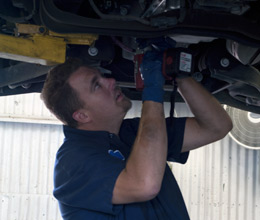
At All Around Auto Repair, our approach to high-mileage care is thorough and preventative. We connect computerized vehicle diagnostics tools to scan for historic fault codes, inspect chassis joints on a lift, test battery cold-cranking amps, and evaluate fluid conditions to build a customized maintenance plan tailored to your driving habits.
Reaching 100,000 miles isn’t a signal to sell—it’s simply the beginning of a rewarding new chapter in your vehicle’s lifespan. With professional oversight, timely fluid services, and proactive safety checkups, your car can remain safe, efficient, and dependable for another 100,000 miles and beyond.
If your vehicle is approaching or past the six-digit mark on the odometer, let our experienced team evaluate its major systems and keep your drive completely worry-free.
To schedule a multi-point high-mileage inspection or a digital powertrain evaluation, please contact All Around Auto Repair today.
📍 1244 Central Ave, Santa Rosa, CA 95401
All Around Auto Repair – Trusted Auto Repair, Maintenance & Diagnostics Since 2001.