What Causes White, Blue, or Black Exhaust Smoke?
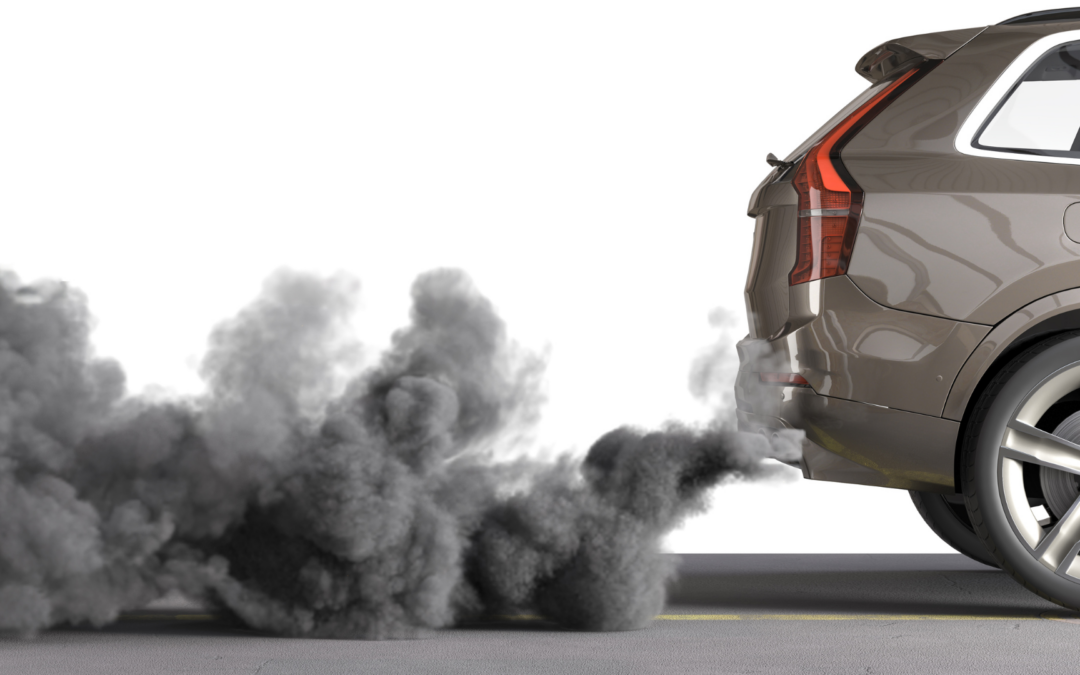
A small amount of exhaust is normal when you start your vehicle, especially on a cold morning. But if you notice thick white, blue, or black smoke coming from the tailpipe, your car may be trying to tell you that something isn’t right.
The color of the exhaust smoke can provide valuable clues about what’s happening inside your engine. While some causes are relatively minor, others can indicate serious mechanical problems that should be addressed as soon as possible.
Understanding what each color means can help you know when it’s safe to keep driving—and when it’s time to have your vehicle professionally inspected.
When Is Exhaust Smoke Normal?
Before assuming the worst, it’s important to know that not all visible exhaust is a sign of trouble.
On cool or humid mornings, you may notice a light white vapor coming from the exhaust for the first few minutes after starting the engine. This is simply water vapor created during the combustion process.
Normal exhaust vapor should:
- Disappear as the engine warms up
- Be thin and almost transparent
- Have no unusual odor
- Not affect engine performance
If the smoke continues after the engine reaches operating temperature, it’s worth investigating.
What White Exhaust Smoke Can Mean
Persistent white smoke usually indicates that coolant is entering the combustion chamber.
This can happen if a cooling system component or an internal engine seal has failed.
Possible causes include:
- Blown head gasket
- Cracked cylinder head
- Cracked engine block
- Intake manifold gasket leak (on some engines)
You may also notice:
- Sweet-smelling exhaust
- Engine overheating
- Low coolant levels
- Rough engine operation
- Milky engine oil
Because coolant inside the engine can cause significant damage, persistent white smoke should never be ignored. In severe cases, this requires major engine work and overhauls to fix leaky gaskets or cracked blocks.

What Blue Exhaust Smoke Means
Blue smoke almost always indicates that the engine is burning oil.
Engine oil should remain inside the lubrication system, but worn or damaged components can allow oil to enter the combustion chamber, where it burns along with the air-fuel mixture.
According to technical resources like the AAA exhaust system troubleshooting guide, common causes include:
- Worn piston rings
- Valve seal wear
- Turbocharger seal failure
- PCV system problems
Additional symptoms may include:
- Frequent oil top-offs
- Oil warning lights
- Reduced engine performance
- Oily residue near the exhaust
- Burning oil smell
The longer oil continues to burn, the greater the risk of damage to the catalytic converter and other emissions components.
What Black Exhaust Smoke Means
Black smoke typically indicates that the engine is burning too much fuel. An overly rich air-fuel mixture reduces fuel efficiency and increases emissions.
Possible causes include:
- Dirty air filter
- Faulty fuel injectors
- Malfunctioning mass airflow (MAF) sensor
- Oxygen sensor problems
- Fuel pressure issues
- Engine management system faults
Drivers may notice:
- Poor fuel economy
- Strong fuel odor
- Sluggish acceleration
- Check Engine Light
- Soot around the tailpipe
A professional diagnostic inspection can determine why the engine is receiving more fuel than it needs.
Can a Turbocharger Cause Exhaust Smoke?
Yes. Turbocharged engines rely on oil to lubricate the turbocharger’s bearings.
If the internal seals begin to wear, oil may leak into either the intake or exhaust side of the turbocharger.
This often produces:
- Blue smoke during acceleration
- Smoke after idling
- Increased oil consumption
- Reduced engine performance
Early diagnosis can often prevent additional engine damage.

Smoke Combined With Warning Lights
If exhaust smoke appears along with a dashboard warning light, the problem may be more serious.
Pay close attention if you notice:
- Check Engine Light
- Low Oil Pressure Warning
- Engine Temperature Warning
- Low Coolant Warning
These indicators provide valuable information that helps technicians identify the underlying issue more quickly.
Should You Keep Driving?
That depends on the type of smoke and the symptoms you’re experiencing.
Light condensation that disappears quickly is usually harmless.
However, if the smoke is thick, continuous, or accompanied by overheating, unusual noises, poor performance, or warning lights, continuing to drive could cause additional damage. To comply with environmental and safety standards monitored by agencies like the NHTSA, addressing heavy smoke emissions quickly is essential.
How Professional Diagnostics Identify the Cause
Because several different problems can produce similar exhaust smoke, proper diagnosis is essential. As detailed in HowStuffWorks’ guide to engine diagnostics, modern engines require specialized tools to read exact sensor data.
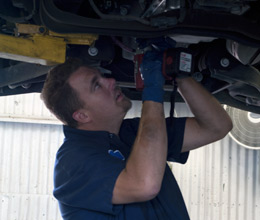
Technicians performing comprehensive vehicle diagnostics beyond error codes may inspect:
- Cooling system pressure
- Engine oil condition
- Compression levels
- Turbocharger operation
- Fuel system performance
- Emissions system components
- Diagnostic trouble codes
Testing the vehicle rather than guessing allows repairs to focus on the actual cause of the problem.
Preventive Maintenance Can Reduce the Risk
While not every issue can be prevented, routine maintenance greatly reduces the likelihood of many common engine problems.
Regular maintenance includes:
- Scheduled oil and filter changes
- Cooling system inspections
- Air filter replacement
- Spark plug service
- Fluid level checks
- Prompt repair of leaks
- Addressing warning lights early

Final Thoughts
The color of your exhaust smoke can reveal a great deal about your vehicle’s health.
White smoke may point to a coolant leak, blue smoke often means the engine is burning oil, and black smoke usually indicates too much fuel is entering the engine.
While some causes are minor, others can lead to expensive engine damage if ignored. The sooner unusual exhaust smoke is diagnosed, the better your chances of avoiding major repairs.
If you’ve noticed white, blue, or black smoke coming from your exhaust, don’t wait for the problem to get worse. Feel free to contact our experienced technicians at All Around Auto Repair to inspect your vehicle, identify the cause, and keep you safely on the road.
📞 (707) 837-0646
📍 1244 Central Ave, Santa Rosa, CA 95401
🌐 allaroundautorepair.com
All Around Auto Repair – Trusted Auto Repair, Engine Diagnostics & Maintenance Since 2001.