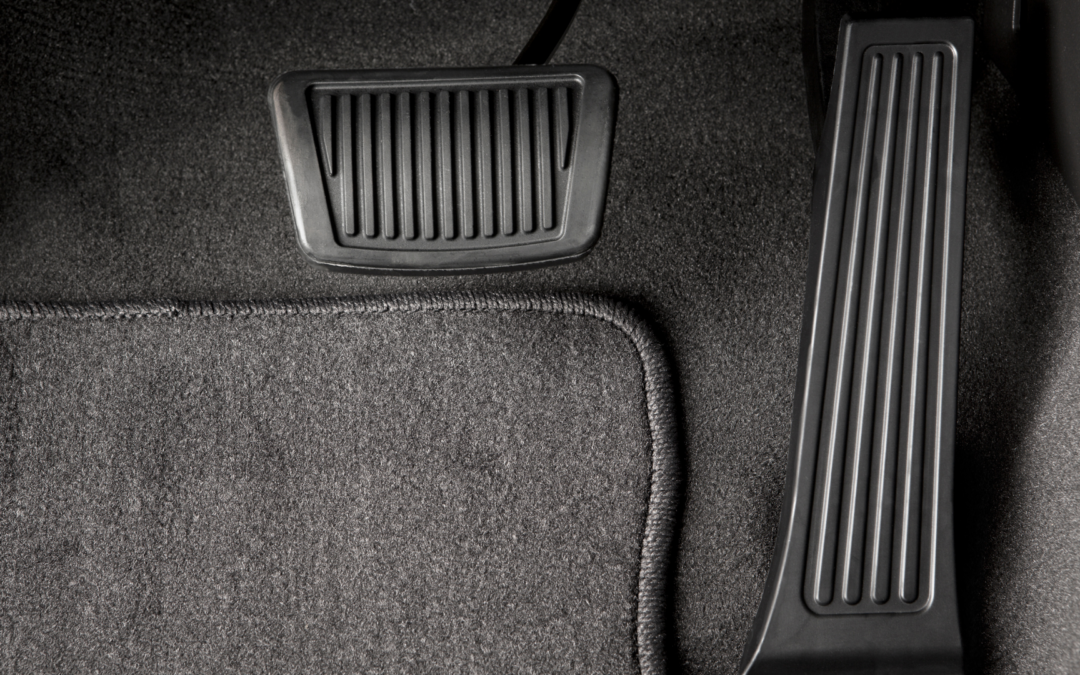
You press the gas pedal expecting an immediate response, but instead, there’s a delay. The engine hesitates, acceleration feels sluggish, or the car takes a moment to “wake up” before moving. There’s no warning light on the dashboard, no obvious noise, and no clear explanation. Yet something definitely feels off.
A laggy gas pedal is a common complaint, especially in modern vehicles, and it often confuses drivers because the Check Engine Light stays off. Many assume the issue is normal, part of how newer cars are designed, or simply something they’ll have to live with. In reality, delayed throttle response is often a sign that something isn’t working as efficiently as it should.
In this blog, we’ll explain what causes a laggy gas pedal, why it can happen even without warning lights, and what you can do to restore smooth, responsive acceleration.

What Does “Laggy” Throttle Response Really Mean?
A laggy gas pedal refers to a delay between pressing the accelerator and the engine responding. Instead of instant acceleration, you may notice:
- A brief pause before the car moves
- Sluggish acceleration from a stop
- Hesitation when merging or passing
- Inconsistent throttle response
- A feeling that the car lacks power
This delay may last only a second or two, but in traffic or emergency situations, that hesitation matters.
Why Modern Cars Are More Prone to Throttle Lag
Older vehicles used a mechanical throttle cable that physically connected the gas pedal to the throttle body. When you pressed the pedal, the throttle opened instantly.
Most modern vehicles use electronic throttle control, often called “drive-by-wire.” Instead of a cable, sensors interpret pedal input and send signals to the engine computer, which then decides how much throttle to apply.
This system improves fuel efficiency and emissions, but it also introduces new potential problems. Any issue with sensors, airflow, fuel delivery, or software adaptation can cause delayed throttle response, even if no warning light appears.
1. Carbon Buildup in the Throttle Body
One of the most common causes of a laggy gas pedal is a dirty throttle body.
Over time, carbon deposits build up around the throttle plate due to:
- Normal combustion byproducts
- Short trips
- Stop-and-go driving
When carbon restricts airflow, the engine struggles to respond smoothly to throttle input.
Symptoms
- Hesitation when accelerating
- Rough idle
- Delayed throttle response
- Occasional stalling
Why there’s no Check Engine Light
Carbon buildup often doesn’t trigger sensor faults, it just reduces efficiency.
Solution
Professional throttle body cleaning restores airflow and responsiveness.
2. Dirty or Failing Mass Air Flow (MAF) Sensor
The MAF sensor measures how much air enters the engine so the computer can deliver the correct amount of fuel. If the sensor is dirty or inaccurate, fuel delivery becomes inconsistent.
Symptoms
- Lag when pressing the gas pedal
- Poor acceleration
- Reduced fuel economy
- Rough idle
Why the light stays off
The sensor may still be sending data, just not accurate data.
Solution
Careful cleaning or replacement after proper testing.
3. Worn Spark Plugs or Weak Ignition Coils
Ignition components play a major role in throttle response. If spark plugs or coils are worn, combustion becomes weaker, especially under acceleration.
Symptoms
- Hesitation under load
- Sluggish acceleration
- Engine feels “lazy”
- Occasional misfires (but not enough to trigger a light)
Why this happens without a warning
Minor misfires may not exceed the threshold required to illuminate the Check Engine Light.
Solution
Spark plug inspection and replacement, along with coil testing.
4. Fuel Delivery Issues (Without Obvious Failure)
Your engine needs consistent fuel pressure to respond quickly. Problems don’t always show up as total failure.
Possible causes include:
- Partially clogged fuel injectors
- Restricted fuel filter
- Weak fuel pump
- Low fuel pressure under load
Symptoms
- Lag when accelerating
- Poor response at highway speeds
- Hesitation during passing
Why it’s hard to detect
Fuel pressure may be borderline, enough to avoid codes but not enough for optimal performance.
Solution
Fuel system diagnostics and pressure testing.

5. Transmission Behavior (Not Always an Engine Problem)
Sometimes the engine is fine, but the transmission delays power delivery.
Modern transmissions rely on:
- Electronic solenoids
- Adaptive learning software
- Fluid pressure
If the transmission hesitates before downshifting or engaging, acceleration feels delayed.
Symptoms
- RPMs rise but speed doesn’t immediately increase
- Delay when accelerating from a stop
- Rough or inconsistent shifting
Solution
Transmission diagnostics, fluid inspection, and adaptation reset if needed.
6. Software Adaptation and Driving Habits
Many vehicles “learn” your driving style over time to optimize fuel economy. If you drive gently most of the time, the system may intentionally soften throttle response.
Why this happens
- Adaptive throttle mapping
- Fuel-saving algorithms
When it becomes a problem
- Sudden need for quick acceleration
- Hesitation that feels excessive
Solution
Throttle adaptation reset during service, restoring factory responsiveness.
7. Vacuum Leaks That Don’t Trigger a Warning Light
Small vacuum leaks allow unmetered air into the engine, disrupting fuel balance.
Common sources
- Aging rubber hoses
- Intake gaskets
- Cracked plastic fittings
Symptoms
- Hesitation
- Rough idle
- Inconsistent throttle response
Why the light stays off
Minor leaks may not trigger a fault code but still affect performance.
8. Low-Quality Fuel or Carbon Buildup in the Intake System
Fuel quality plays a bigger role than many drivers realize.
Low-quality fuel can:
- Leave carbon deposits
- Reduce injector efficiency
- Affect throttle response
Short trips and city driving make the problem worse.
Why You Shouldn’t Ignore Throttle Lag
Even mild hesitation is a warning sign. Ignoring it can lead to:
- Worsening fuel economy
- Increased emissions
- Catalytic converter damage
- Transmission stress
- Unsafe merging and passing situations
Throttle lag may seem minor, but it often signals problems that grow over time.
How Mechanics Diagnose a Laggy Gas Pedal
At All Around Auto Repair, diagnosing throttle lag involves more than reading codes.
Our process includes:
- Throttle body inspection and cleaning
- MAF sensor testing
- Fuel pressure testing
- Ignition system inspection
- Transmission behavior analysis
- Vacuum leak testing
- Software adaptation checks
This ensures the root cause is addressed, not just the symptom.
How to Restore Smooth, Responsive Acceleration
Depending on the cause, solutions may include:
- Throttle body service
- Spark plug replacement
- Fuel system cleaning
- Sensor cleaning or replacement
- Transmission service
- Software resets
Most fixes are straightforward when caught early.

Final Thoughts: Lag Isn’t Normal: Even If There’s No Warning Light
Your car should respond immediately when you press the gas pedal. If it doesn’t, something isn’t operating efficiently, even if the dashboard looks normal.
A laggy gas pedal is your vehicle’s way of asking for attention. Addressing it early improves performance, safety, and driving enjoyment.
If your car feels sluggish, hesitant, or unresponsive, let experienced professionals take a closer look.
Schedule a Performance Inspection Today
📞 (707) 837-0646
📍 1244 Central Ave, Santa Rosa, CA 95401
🌐 allaroundautorepair.com