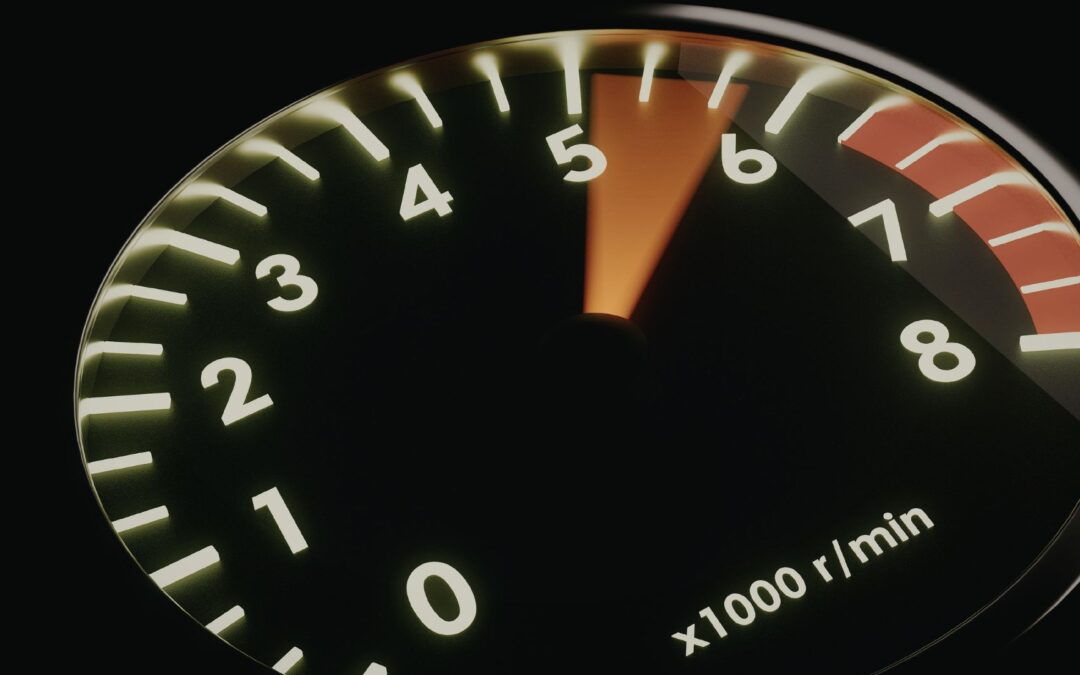
You’re stopped at a red light, foot on the brake, when you notice the tachometer behaving strangely. The RPMs rise, then drop. The engine sounds uneven. Maybe the car vibrates slightly, or feels like it’s about to stall. A moment later, everything seems normal again, until the next stoplight.
If your car’s RPMs jump up and down while idling, you’re not imagining it. This issue, often referred to as unstable idle or idle fluctuation, is a common drivability problem. And while it may not always trigger a Check Engine Light right away, it’s a sign that something isn’t operating as it should.
In this blog, we’ll explain what causes RPM fluctuations at a stoplight, why the problem often appears only at idle, and why ignoring it can lead to bigger repairs over time.

What Does It Mean When RPMs Fluctuate at Idle?
When your car is stopped, the engine should idle at a steady speed, usually between 600 and 900 RPM, depending on the vehicle. That steady idle means the engine is getting the correct balance of air, fuel, and spark.
When RPMs rise and fall at a stoplight, it means the engine computer is constantly trying to correct something that’s out of balance. The system is “hunting” for the right conditions to keep the engine running smoothly.
This behavior may show up as:
- RPMs surging up and down
- A rough or shaky idle
- Engine nearly stalling, then recovering
- Hesitation when pulling away from a stop
- Increased vibration inside the cabin
Why the Problem Often Happens at Stoplights
Idle is when your engine is working the hardest to stay stable with the least amount of input. There’s no momentum from the wheels, minimal airflow, and very little fuel being injected.
At idle:
- Small air leaks matter more
- Dirty components have a bigger impact
- Weak ignition shows up faster
- Sensors must be highly accurate
That’s why many idle-related problems don’t appear while cruising at highway speed.
1. Dirty Throttle Body (Most Common Cause)
One of the most common reasons for fluctuating RPMs is a dirty throttle body.
What the throttle body does
The throttle body controls how much air enters the engine. At idle, the throttle plate is nearly closed, allowing only a small amount of air through.
Over time, carbon buildup forms around the throttle plate due to:
- Normal combustion byproducts
- Short trips
- Stop-and-go driving
How it causes RPM fluctuation
When carbon restricts airflow, the engine struggles to maintain idle speed. The engine computer repeatedly opens and closes the throttle to compensate, causing RPMs to surge.
Symptoms
- RPMs rising and falling at stops
- Rough idle
- Stalling when coming to a stop
- Hesitation when accelerating
Solution
Professional throttle body cleaning and idle relearn.
2. Vacuum Leaks
Your engine relies on a sealed vacuum system to measure airflow accurately. Even a small leak can cause idle instability.
Common sources of vacuum leaks
- Cracked rubber hoses
- Loose intake connections
- Failing intake manifold gaskets
- Brittle plastic fittings
Why vacuum leaks affect idle
Unmetered air enters the engine, throwing off the air-fuel mixture. At idle, the engine has little margin for error, so RPMs fluctuate as the computer tries to compensate.
Symptoms
- Jumping RPMs at stoplights
- Hissing sounds under the hood
- Rough idle
- Occasional stalling
3. Failing Idle Air Control (IAC) Valve (Older Vehicles)
Some vehicles use an Idle Air Control valve to regulate idle speed.
What happens when it fails
If the IAC valve sticks or becomes clogged:
- Idle speed becomes unstable
- RPMs surge or drop
- Engine may stall at stops
Why it’s often overlooked
Not all vehicles use an IAC valve, and failures don’t always trigger a warning light.
4. Dirty or Faulty Mass Air Flow (MAF) Sensor
The MAF sensor measures how much air enters the engine so the computer can adjust fuel delivery.
How it causes idle issues
If the sensor is dirty or inaccurate:
- Fuel delivery becomes inconsistent
- Idle speed fluctuates
- Engine struggles to maintain smooth operation
Why there may be no Check Engine Light
The sensor may still send data, just not precise data.

5. Worn Spark Plugs or Ignition Components
At idle, your engine needs strong, consistent spark to maintain smooth combustion.
What happens when ignition parts wear
- Weak spark causes uneven combustion
- Engine speed fluctuates
- RPMs jump as cylinders fire inconsistently
Symptoms
- Rough idle
- Hesitation when accelerating
- Slight vibration at stops
Minor ignition issues often don’t set fault codes right away.
6. Fuel Delivery Issues
Your engine needs consistent fuel pressure, even at idle.
Possible causes
- Partially clogged fuel injectors
- Weak fuel pump
- Dirty fuel filter
- Low fuel pressure
How it affects idle
Uneven fuel delivery causes RPM instability, especially when the engine is warm and idling.
7. Engine Coolant Temperature Sensor Issues
The engine computer relies on temperature data to adjust idle speed.
What happens if the sensor is inaccurate
- Idle speed fluctuates
- Engine runs rich or lean
- RPMs jump unexpectedly
This issue is more noticeable after the engine warms up.
8. Transmission Load at Idle
In automatic vehicles, shifting into Drive adds load to the engine. If the engine isn’t compensating properly, RPMs may dip or surge.
Causes include
- Dirty throttle body
- Transmission issues
- Engine mounts exaggerating vibration
9. Software Adaptation Issues
Modern vehicles “learn” driving habits and adjust idle behavior accordingly.
When adaptation causes problems
- Battery replacement
- Jump-starting
- Throttle body service
- Software glitches
In these cases, the vehicle may need an idle relearn or software reset.
Why You Shouldn’t Ignore RPM Fluctuations
While the car may still drive, ignoring unstable idle can lead to:
- Stalling in traffic
- Poor fuel economy
- Increased emissions
- Catalytic converter damage
- More severe drivability issues
What starts as a minor annoyance often turns into a more complex repair if left unaddressed.
How Mechanics Diagnose Idle Fluctuation
At All Around Auto Repair, diagnosing RPM issues involves a systematic approach:
- Throttle body inspection and cleaning
- Vacuum leak testing
- Sensor data analysis
- Ignition system inspection
- Fuel pressure testing
- Software checks and relearns
This ensures the root cause is identified, not just the symptom masked.
How to Prevent Idle Problems
Preventive maintenance helps keep idle stable:
- Regular throttle body cleaning
- Timely spark plug replacement
- Replacing aging vacuum hoses
- Using quality fuel
- Keeping up with scheduled maintenance

Final Thoughts: Fluctuating RPMs Are a Warning Sign
Your engine should idle smoothly and consistently. If RPMs jump up and down at stoplights, it’s your vehicle telling you something isn’t quite right.
Catching the issue early usually means a simple fix. Ignoring it often leads to bigger problems and higher repair costs.
If your car idles rough or your RPMs fluctuate, let experienced professionals take a closer look.
Schedule a Drivability Inspection Today
📞 (707) 837-0646
📍 1244 Central Ave, Santa Rosa, CA 95401
🌐 allaroundautorepair.com
All Around Auto Repair — Repair. Maintenance. Service. Since 2001.
Your trusted experts for idle diagnostics, engine performance issues, and complete automotive care.