When most drivers think about vehicle performance, they focus on fuel. Fuel quality, fuel prices, and fuel economy often get the most attention. But there is another ingredient that is just as critical to your engine’s internal performance: air.
Your engine doesn’t simply burn gasoline—it burns a carefully balanced mixture of air and fuel. Without proper airflow, even the highest-quality fuel cannot deliver efficient combustion. When airflow becomes restricted, contaminated, or improperly measured, your vehicle may still run, but it won’t perform the way it was designed to. Over time, airflow problems reduce fuel economy, increase emissions, and lead to costly mechanical repairs.
Every combustion event inside your engine depends on air. As the engine operates, air enters through the intake system, mixes with fuel, and is compressed before ignition. The quality and quantity of that airflow directly affect how cleanly combustion takes place. Modern vehicles constantly monitor this loop using sensors and computer controls, allowing the engine to make thousands of automatic adjustments every second to maintain a steady balance.

Clogged Intake Media and Carbon-Contaminated Throttle Plates
One of the simplest yet most important airflow components is the engine air filter. Its job is to prevent dirt, dust, and abrasive debris from entering the engine cylinders. Over time, the filter gradually becomes restricted as it collects environmental contaminants. A choked air filter limits oxygen volume, forcing the engine to work harder to draw in air and creating a distinct drop in low-speed acceleration. Routinely checking this element during your standard oil changes and filter updates is an affordable way to prevent unnecessary engine strain.
Another critical airflow gate is the throttle body. The throttle body regulates how much air enters the intake manifold based on how far you press the accelerator pedal. Over time, carbon varnish naturally builds up around the internal butterfly plate, especially in vehicles used for stop-and-go urban driving. As deposits increase, the microscopic gap needed for a clean idle becomes blocked, leading to a rough idle, hesitation, or sudden stalling at stoplights.
Modern engines rely heavily on the Mass Airflow (MAF) sensor to measure the exact density of incoming air. If the sensor’s internal hot-wire gets coated in dust or oil, it feeds inaccurate data to the computer. This causes the engine to run too lean (too much air) or too rich (too much fuel), decreasing your town mileage and triggering the Check Engine Light. Isolating a lazy airflow sensor requires an advanced vehicle diagnostics procedure to scan live operational parameters.

Unmetered Vacuum Leaks and Emissions System Damage
The entire intake tract must remain completely sealed to ensure all incoming oxygen passes through the MAF sensor. When vacuum hoses crack, intake manifold gaskets shrink, or PCV connections loosen, unmetered air leaks into the system. Technical airflow parameters monitored by SAE International reveal that unmetered vacuum leaks disrupt the engine’s ideal $14.7:1$ stoichiometric balance, causing erratic RPM tracking and rough performance that is particularly severe when the engine is idling at a stop.
When airflow measurements become inaccurate, the engine is forced to alter its fuel trim strategies to compensate. These corrections directly ruin fuel efficiency and spike exhaust pollution. Automotive reliability reports compiled by Consumer Reports indicate that running an engine with a compromised air-to-fuel ratio dumps unburned hydrocarbons into the exhaust tract, superheating the catalytic converter and leading to premature emissions component failure. Incorporating comprehensive vacuum checks into your scheduled routine auto maintenance updates stops these minor leaks from becoming expensive repairs.

Thermal Regulation and Cabin Air Quality Parameters
Airflow does not only impact internal combustion chambers. Your cooling system relies on a clean, unrestricted stream of ambient air passing through the radiator fins to dissipate engine heat. Road debris, leaves, or bent cooling fins can block this external airflow path, causing engine temperatures to climb. Breakdown statistics managed by the American Automobile Association (AAA) confirm that secondary airflow blockages through the radiator grill are a leading cause of highway overheating events during warm summer months, accelerating gasket failure.
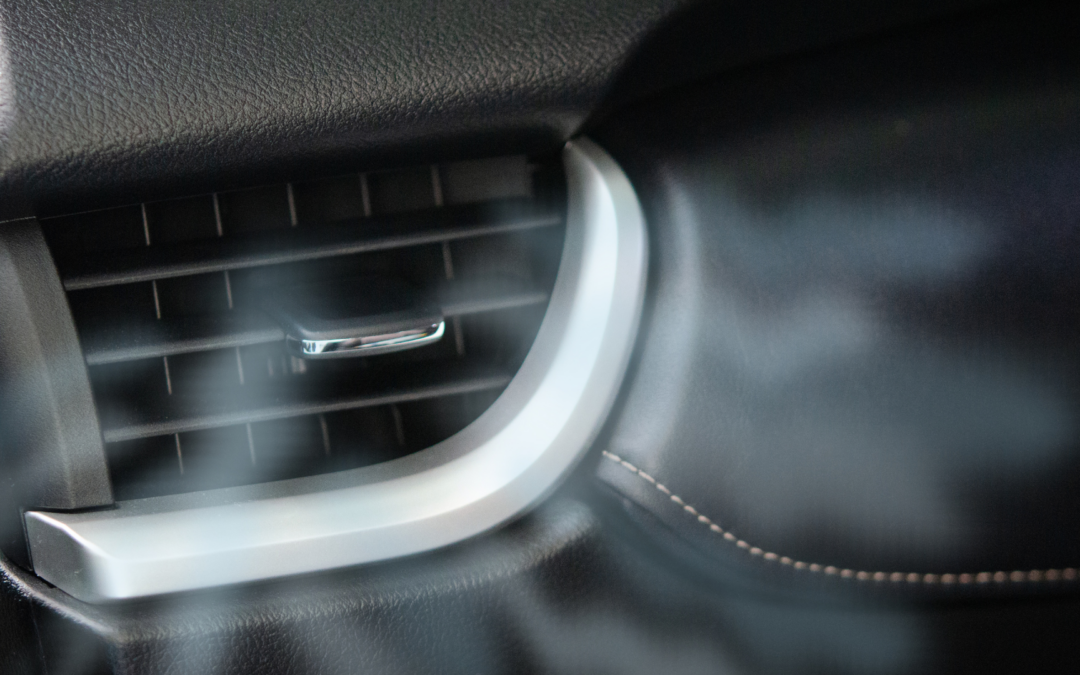
While it doesn’t alter engine performance, you shouldn’t overlook your cabin air filter either. A clogged cabin filter restricts airflow through your vehicle’s heating, ventilation, and air conditioning (HVAC) system. This restriction places extra strain on the blower motor while reducing your windshield defroster efficiency, creating a distinct safety hazard during cold or rainy commutes due to poor visibility.
At All Around Auto Repair, our airflow diagnostics involve a complete review of your vehicle’s intake and vacuum integrity. We don’t guess; we smoke-test lines for hidden leaks, examine live sensor voltage data, and clean throttle bores to ensure your engine breathes exactly the way the factory intended. Restoring proper airflow parameters instantly brings back your car’s crisp throttle response, stable idle, and peak fuel economy.
Air may be invisible, but its impact on your car’s lifespan and daily performance is massive. If your car feels sluggish, consumes more fuel than usual, or has started idling roughly at intersections, let our experienced technicians inspect your vehicle’s breathing network and keep your drive completely dependable.
To schedule a professional intake system inspection or a computerized live-data sensor analysis, please contact All Around Auto Repair today.
📞 (707) 837-0646
📍 1244 Central Ave, Santa Rosa, CA 95401
All Around Auto Repair – Repair. Maintenance. Service. Since 2001.