
Hearing a clicking sound when you turn your steering wheel, especially at low speeds or while parking, can be alarming. Many drivers notice it while pulling into a driveway, making a U-turn, or maneuvering in a parking lot. At first, the car still drives fine, so it’s tempting to ignore the noise and hope it goes away.
Unfortunately, a clicking sound when turning is almost always a sign of a mechanical issue. While some causes are relatively minor, others can affect your vehicle’s safety, steering control, and long-term reliability. Ignoring the noise can allow a small problem to turn into a costly repair, or even a complete breakdown on the road.
When you turn the steering wheel, multiple units work in perfect synchronization, including the steering linkages, suspension joints, wheel bearings, and the drivetrain. Turning places extra stress on these components. If something is worn, loose, or damaged, that stress reveals itself as a clicking, popping, or snapping sound.

Worn CV Joints and Fluid Lubrication Failure
The most frequent cause of a rhythmic clicking sound when turning—especially during low-speed acceleration—is a worn constant velocity (CV) joint. CV joints transfer power from the transmission to the wheels while allowing the front axle to flex up and down and pivot left and right. They are essential components on front-wheel-drive and many all-wheel-drive vehicle layouts.
CV joints are protected by sealed rubber boots filled with high-temperature grease. Over time, these boots can crack, tear, or become sliced by road debris, allowing the vital grease to sling out while inviting dirt and moisture inside the precision bearing cage. Once the joint loses its lubrication, metal-on-metal components wear down rapidly. Technical dynamic logs published by SAE International outline that internal ball-bearing pitting within a dry CV housing alters the load vectors during a turn, creating a sharp snapping sound that directly mirrors engine RPM changes.
A failing CV joint will eventually snap completely under load. When that happens, the vehicle instantly loses the ability to transfer power to the wheels, leaving you stranded with an undrivable car. If you notice grease splattered inside your front wheel wells, getting an advanced vehicle diagnostics inspection is essential before the axle shears.
Failing Wheel Bearings and Loose Steering Linkages
Wheel bearings allow your hub assemblies to spin smoothly with minimal friction. As ball bearings wear unevenly or lose internal lubrication, shifting the vehicle’s weight from side to side during a corner places heavy side-load stress on the damaged race, generating a distinct popping or grinding sound. Severely worn wheel bearings can overheat or seize entirely, creating extreme structural instability that requires immediate auto inspections to prevent total hub separation on the highway.
Your steering and suspension units contain multiple mechanical joints that shift every time you turn. Worn tie rod ends, loose steering rack mountings, or deteriorated ball joints develop excessive mechanical play. When you turn the wheel, that structural looseness allows components to shift abruptly under the weight of the vehicle, producing clicking or heavy clunking noises over bumps. These tracking errors directly affect vehicle control and should always be paired with professional alignment corrections during your scheduled routine auto maintenance checkpoints.

Strut Mount Binding and Why Turning Noises Escalate
Another common source of low-speed clicking is a worn upper strut mount bearing. The strut mounts connect your suspension struts to the vehicle chassis, allowing the entire spring assembly to rotate smoothly as you turn the wheels. When the internal needle bearings rust or bind, the coil spring binds against the mount until it abruptly snaps into place, creating a loud popping sound. Consumer reliability diagnostics managed by Consumer Reports confirm that a binding upper strut bearing places secondary rotational torque on the lower tie rods, which can accelerate wear on your steering rack if left uncorrected.
Clicking and snapping noises rarely disappear on their own. As components continue to experience friction, mechanical tolerances open wider, metal-on-metal grinding worsens, and heat accelerates component destruction. What begins as a faint click during tight parking lot maneuvers can quickly evolve into steering instability, severe wheel wobble, or total mechanical failure. Catching these structural symptoms early is always the safest and most affordable path to car maintenance.

Professional Chassis Diagnostics and Prevention
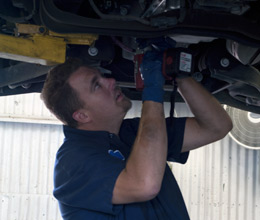
At All Around Auto Repair, diagnosing turning-related noises involves a thorough system inspection rather than guesswork. Our technicians test drive the vehicle to recreate the exact frequency of the sound, inspect CV boots for tears, check wheel bearings for end-play tolerances, verify torque on axle nuts, and check suspension bushings on a lift to identify components that are out of balance.
Delaying a suspension or drivetrain repair often causes a costly chain reaction. For example, a torn CV boot caught early may only require a basic joint or boot replacement. Left untreated, a dry joint can seize, tearing out your transmission seals, bending your lower control arm, and causing extensive body damage. Fleet safety tracking data managed by the American Automobile Association (AAA) highlights that vehicle owners who address early popping sounds save significantly on long-term repair costs compared to motorists who delay front-end diagnostics until a complete breakdown occurs.
A clicking sound when you turn is your vehicle’s way of requesting immediate mechanical attention. Proper preventive maintenance—including regular suspension inspections, avoiding harsh pothole impacts, and checking rubber boots for early tears—is the best way to keep your steering quiet, predictable, and secure across all driving environments.
If your car clicks, pops, or snaps during turns, let our experienced technicians isolate the root cause and restore your vehicle’s factory-smooth handling parameters.
To schedule an expert steering linkage check or a comprehensive drivetrain safety inspection, please contact All Around Auto Repair today.
📞 (707) 837-0646
📍 1244 Central Ave, Santa Rosa, CA 95401
All Around Auto Repair – Repair. Maintenance. Service. Since 2001.