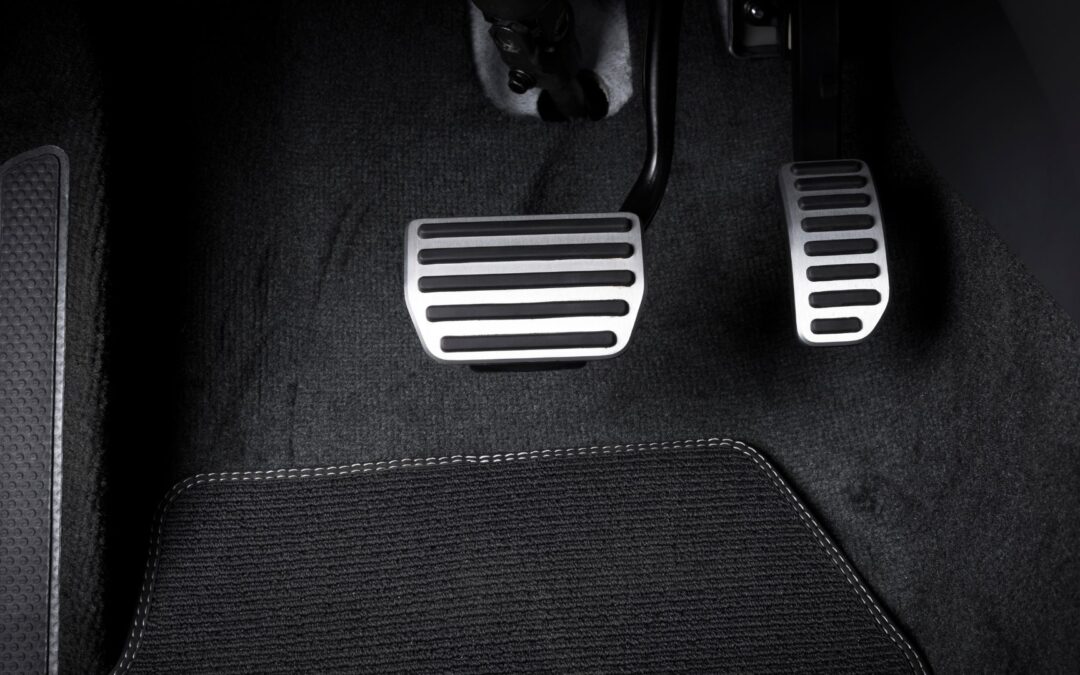
Your brake pedal should feel firm, responsive, and predictable every time you press it. If it suddenly feels soft, spongy, or sinks closer to the floor than usual, that’s not just an inconvenience, it’s a serious warning sign.
Many drivers continue driving with a soft brake pedal, hoping it’s nothing or assuming it will “fix itself.” Unfortunately, brake problems never improve on their own. In fact, a spongy brake pedal often signals an issue that can rapidly compromise your ability to stop safely.
In this blog, we’ll explain what a soft brake pedal really means, what causes it, why it’s dangerous to ignore, and what should be done to fix it before it turns into a costly or dangerous situation.

What Does a Soft or Spongy Brake Pedal Mean?
When your brake pedal feels soft or spongy, it usually means that hydraulic pressure inside the braking system isn’t being applied correctly. Your brakes rely on pressurized brake fluid to transfer force from your foot to the brake pads and rotors. Any disruption in that system affects stopping power.
A soft brake pedal may feel like:
- The pedal sinks lower than normal
- You need to press harder to stop
- The pedal feels springy or squishy
- Braking response feels delayed
- The pedal slowly sinks while stopped
These symptoms indicate a loss of pressure or contamination somewhere in the braking system.
Why a Soft Brake Pedal Is a Serious Safety Issue
Your brakes are the most important safety system on your vehicle. A soft pedal means:
- Longer stopping distances
- Reduced control during emergency braking
- Increased risk of brake failure
- Higher chances of rear-end collisions
Even if your car still stops, it may not stop fast enough in an emergency situation.
Driving with compromised brakes is dangerous, not just for you, but for everyone else on the road.
Most Common Causes of a Soft or Spongy Brake Pedal
1. Air in the Brake Lines
Brake systems are designed to operate with liquid only. Air compresses, while fluid does not. If air enters the system, braking pressure becomes inconsistent.
How air gets in:
- Low brake fluid level
- Improper brake repairs
- Leaking brake lines
- Old brake fluid
Result: A soft, springy brake pedal.
Solution: Brake system bleeding to remove trapped air.
2. Old or Contaminated Brake Fluid
Brake fluid absorbs moisture over time. This is normal, but dangerous if ignored.
What moisture does:
- Reduces braking efficiency
- Lowers boiling point of fluid
- Causes internal corrosion
- Creates spongy pedal feel under heat
Contaminated brake fluid can boil under heavy braking, causing sudden brake fade.
Solution: Brake fluid flush and replacement, usually every 2–3 years.
3. Brake Fluid Leaks
Any leak in the braking system reduces hydraulic pressure.
Common leak points:
- Brake lines
- Rubber hoses
- Calipers
- Master cylinder
Warning signs:
- Low brake fluid level
- Brake warning light
- Fluid puddles near wheels
- Pedal sinking to the floor
Brake fluid leaks should be addressed immediately, they can lead to total brake failure.
4. Failing Master Cylinder
The master cylinder generates the pressure needed to activate your brakes. If it fails internally, fluid bypasses the seals instead of building pressure.
Symptoms include:
- Brake pedal slowly sinking at stoplights
- Inconsistent braking feel
- No visible external leaks
This is one of the most dangerous brake failures because pressure loss can happen suddenly.
5. Worn or Malfunctioning Brake Calipers
Brake calipers push the pads against the rotors. If they leak, seize, or flex improperly, braking pressure becomes uneven.
Possible signs:
- Pulling to one side when braking
- Uneven brake pad wear
- Soft pedal feel
- Reduced stopping power
6. ABS System Issues
Modern vehicles use Anti-lock Braking Systems (ABS). Faulty ABS valves or modules can interfere with normal brake pressure.
Indicators include:
- ABS warning light
- Brake pedal pulsation
- Inconsistent pedal feel
While ABS issues don’t always cause a soft pedal, they can contribute to pressure loss.

Why the Problem Often Gets Worse Over Time
Brake issues never stay the same, they get worse.
Ignoring a soft brake pedal can lead to:
- Complete brake failure
- Damage to brake components
- More expensive repairs
- Unsafe driving conditions
For example, moisture-contaminated brake fluid can corrode expensive ABS components internally, turning a simple fluid service into a major repair.
Can You Still Drive with a Soft Brake Pedal?
Technically, maybe.
Safely? No.
Even if the car stops today, you don’t know:
- When the pedal might suddenly sink further
- When fluid pressure might drop completely
- How your brakes will respond in an emergency
Driving with compromised brakes is a gamble, one that’s never worth taking.
How Mechanics Diagnose a Soft Brake Pedal
At All Around Auto Repair, diagnosing brake pedal issues involves a full system evaluation—not guesswork.
Our process includes:
- Brake fluid inspection and testing
- Checking for external and internal leaks
- Bleeding the brake system if needed
- Inspecting calipers, hoses, and lines
- Testing the master cylinder
- ABS system scan and evaluation
- Road testing for consistent pedal feel
This approach ensures we fix the root cause, not just the symptom.
How Often Should Brake Fluid Be Checked or Replaced?
Many drivers don’t realize brake fluid requires maintenance.
General guidelines:
- Check brake fluid at every oil change
- Replace brake fluid every 2–3 years
- Replace sooner in high-heat or stop-and-go driving
Fresh brake fluid improves pedal feel, braking response, and overall safety.
What a Healthy Brake Pedal Should Feel Like
After proper repair, your brake pedal should:
- Feel firm and responsive
- Stop at a consistent height
- Provide predictable braking
- Not sink while stopped
- Respond instantly in emergencies
If your brakes don’t feel like this, something isn’t right.

Final Thoughts: Your Brake Pedal Is Talking: Listen to It
A soft or spongy brake pedal is never normal. It’s your vehicle’s way of telling you that something critical needs attention.
Whether the cause is air in the system, old brake fluid, a leak, or a failing master cylinder, addressing the issue early can prevent accidents and save you significant money.
If your brake pedal doesn’t feel right, trust your instincts, and let a professional inspect it before it becomes a serious hazard.
Schedule a Brake Inspection Today
📞 (707) 837-0646
📍 1244 Central Ave, Santa Rosa, CA 95401
🌐 allaroundautorepair.com
All Around Auto Repair — Repair. Maintenance. Service. Since 2001.
Your trusted experts for brake inspections, brake fluid service, and complete brake system repairs.