Most drivers have felt it at some point—a slight vibration in the steering wheel, a subtle shake through the seat, or a faint tremor when braking, accelerating, or cruising at highway speeds. At first, it may not seem serious. The car still drives, there are no warning lights on the dashboard, and nothing sounds obviously wrong. Many drivers assume the vibration is simply caused by the road surface, uneven pavement, or a minor tire issue that will resolve itself over time.
But small vibrations are rarely meaningless. In many cases, an unusual tremor is one of the earliest warning signs that something within your vehicle’s rotating assemblies or structural links is beginning to wear, shift, loosen, or fail. Ignoring that dynamic signal can allow a simple maintenance item to gradually develop into a highly expensive mechanical failure. Understanding what causes these harmonic variations can help you protect your vehicle, improve handling safety, and avoid unnecessary damage.
A modern vehicle depends on absolute rotational and structural balance to operate efficiently. The wheels must spin evenly, the tires need consistent contact with the road surface, the suspension must dampen kinetic movement, and the brakes must apply deceleration friction smoothly. When all of these systems work together correctly, your vehicle feels smooth, stable, and completely predictable. A persistent vibration means that this engineered equilibrium has been broken.

Centrifugal Tire Imbalances and Friction Brake Rotor Runout
One of the most common sources of high-speed vibration originates directly within the wheels and tires. Tires handle intense road impacts, massive internal temperature swings, and severe pressure fluctuations. A wheel can easily lose its weight balance after you hit a deep pothole or curb, scraping off a clip-on wheel weight. As vehicle speeds climb, centrifugal force magnifies even a tiny fraction of an ounce of wheel imbalance, sending heavy cyclic tremors straight into the steering column. Catching an out-of-balance wheel early during your regular oil changes and filter updates prevents the tread from developing flat spots.
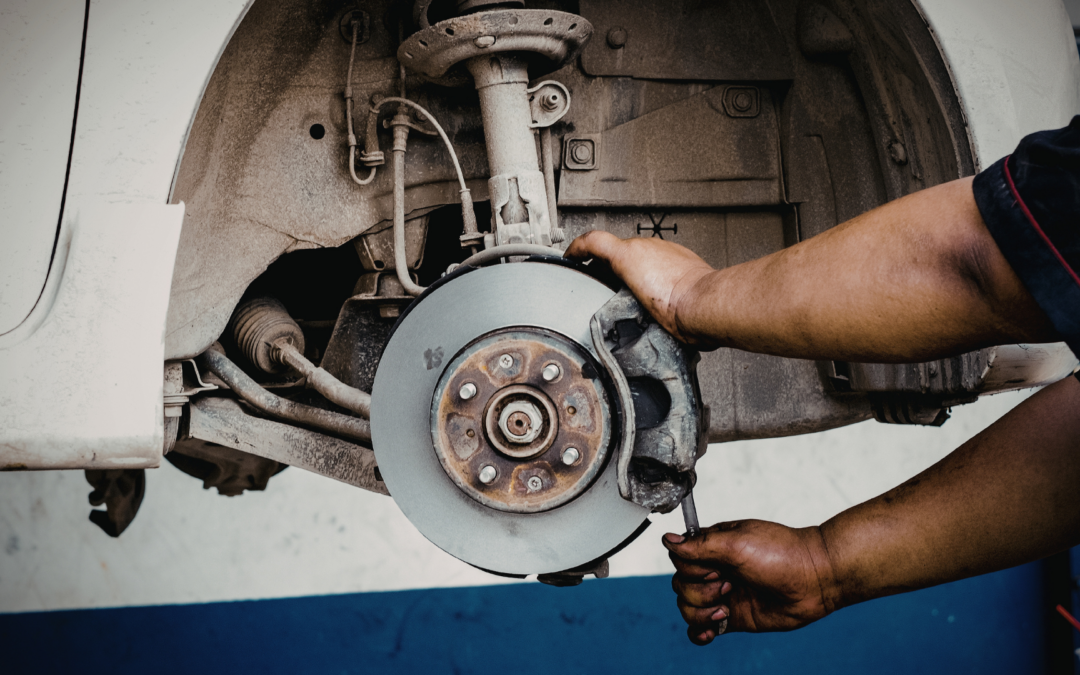
If you primarily feel a severe shaking or pulsing sensation when pressing the brake pedal, your stopping hardware is suffering from excessive runout. This brake pulsation is typically caused by uneven pad transfer layers or warped brake rotor surfaces. When the brake pads clamp onto a rotor that lacks perfectly flat parallel surfaces, the pads slide unevenly over the metal variations. This rapid hydraulic feedback travels backward up the brake lines, through the pedal assembly, and into the driver’s foot, requiring immediate brake repair and safety restoration to preserve your emergency stopping distances.
Vibrations that manifest strictly during acceleration or under heavy engine loads point directly to drivetrain-related degradation. The drivetrain features high-velocity components that transfer twisting force from the engine to the wheel hubs. When internal constant velocity (CV) joints dry out due to a torn rubber boot, or a drive axle becomes slightly bent from road debris, the component oscillates under load. Technical driveline diagnostics published by SAE International confirm that worn internal CV joint bearings fail to distribute torque evenly across the tracking axis, causing a heavy side-to-side chassis shudder during highway acceleration that disappears the moment you coast.

Chassis Binding, Mount Breakdown, and the Mechanical Domino Effect
Worn suspension linkages will quickly make minor wheel vibrations significantly worse. Components like rubber control arm bushings, ball joints, and tie rod ends are responsible for holding the front tires tightly in alignment. When a suspension bushing cracks or its grease dries out, the linkage loses its ability to isolate movement. Instead of absorbing road harshness, the loose joint allows the wheel hub assembly to shake freely. This kinetic movement can easily damage adjacent components, turning a simple tire balance fix into a costly multi-system chassis rebuild if neglected during your scheduled routine auto maintenance updates.
Failing engine or transmission mounts can also cause an alarming interior cabin tremor. These specialized mounts utilize thick rubber or internal hydraulic fluid compartments to isolate the natural power pulses of the engine from the metal passenger frame. When the rubber splits or the internal fluid leaks out, the engine rests directly against the frame rails. According to consumer diagnostic reports tracked by Consumer Reports, collapsed engine mounts transmit an intense, steady vibration through the seats and floorboards when the vehicle is idling at a red light, creating structural fatigue along your exhaust welds and engine accessories.
Because these microscopic mechanical variations often develop very gradually over thousands of miles, many drivers unconsciously adapt by gripping the wheel tighter or adjusting their cruising speeds, assuming the vehicle is just showing its age. However, modern power steering networks and electronic stability systems are highly advanced and will intentionally mask minor wheel shaking as a comfort failsafe, meaning that by the time a vibration becomes clearly noticeable through your steering wheel, the mechanical play is already highly advanced.

Isolating High-Frequency Vibrations with Professional Diagnostics
Ignoring a persistent shake can significantly compromise your driving safety. High-frequency vibrations overwork your wheel bearings and cause your tire tread to cup unevenly, drastically reducing your traction in wet weather. Fleet maintenance studies managed by the American Automobile Association (AAA) emphasize that running a vibrating drivetrain accelerates internal transmission shaft seal failure, causing vital gear lubricants to seep out and risking an unexpected highway breakdown.
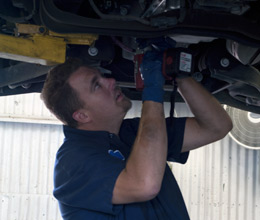
At All Around Auto Repair, our technicians don’t rely on guesswork or throw random parts at a shake. We execute a comprehensive, structured evaluation of your tires, wheels, brakes, and linkages. By utilizing advanced vehicle diagnostics, we inspect component play on a lift, test wheel runout, verify alignment tracking geometry, and analyze brake rotor variations to pinpoint the absolute root cause of your vibration. Catching a simple tire imbalance or a loose link early keeps your car completely safe and easy to control.
Your vehicle is engineered to provide an entirely smooth, quiet, and stable driving experience. If your steering wheel has started shaking at highway speeds, your brake pedal pulses during slowdowns, or you feel an unusual tremor through your seat, let our experienced team diagnose the cause and bring back your factory-grade refinement.
To schedule a computerized wheel balancing or a comprehensive front-end suspension vibration check, please contact All Around Auto Repair today.
📞 (707) 837-0646
📍 1244 Central Ave, Santa Rosa, CA 95401
All Around Auto Repair – Trusted Auto Repair, Maintenance & Diagnostics Since 2001.