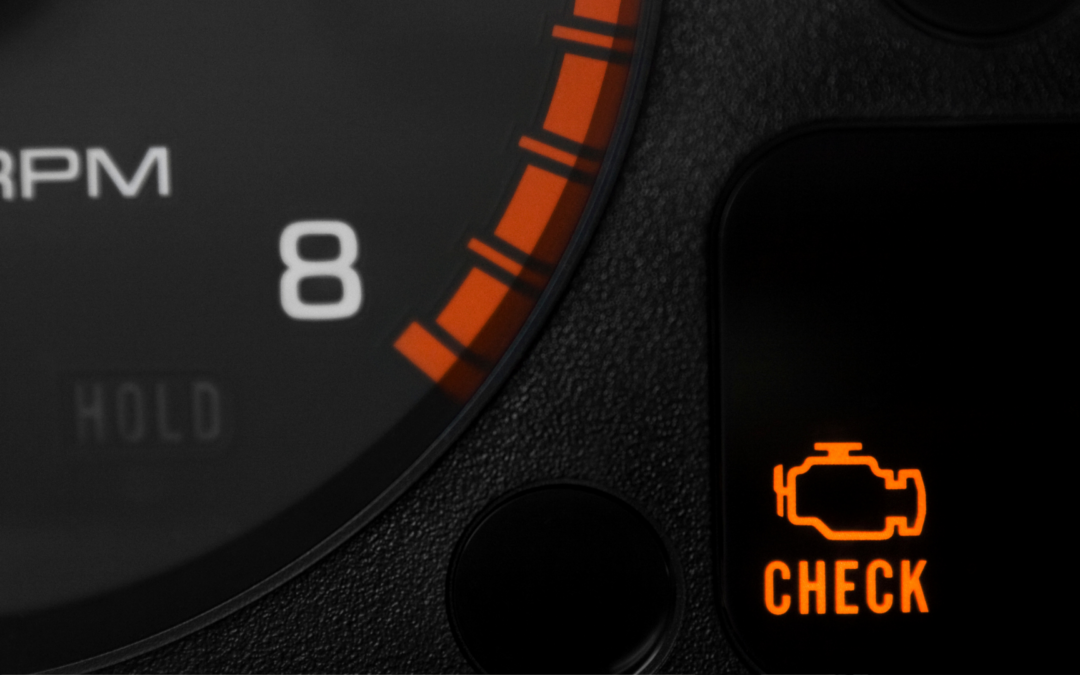
Seeing the Check Engine Light illuminate on your dashboard can be highly stressful. But what can be even more confusing is when the light disappears completely on its own a day or two later. Many drivers assume that if the warning light goes away, the problem has somehow fixed itself. Unfortunately, that’s rarely the case.
An intermittent Check Engine Light is your vehicle’s way of telling you that a problem exists—but only under specific driving conditions. Even if the light turns off, the underlying issue is usually still present, and ignoring it can eventually lead to reduced performance, poor fuel economy, or expensive repairs. Understanding why this light comes and goes can help you identify potential issues before they leave you stranded.
The Check Engine Light is tied directly into your vehicle’s onboard diagnostic system (OBD-II). Modern vehicles constantly monitor dozens of sensors that track engine performance, fuel delivery, emissions parameters, and ignition timing. When a system detects an abnormal reading that falls outside factory specifications, the engine computer stores a diagnostic trouble code (DTC) and illuminates the dashboard light. Even when the light goes dark, that digital footprint remains stored in the module’s memory.

Evaporative Pressure Leaks and Transient Sensor Drift
One of the simplest and most common causes of an intermittent Check Engine Light is a loose, damaged, or improperly sealed gas cap. Your vehicle’s evaporative emissions (EVAP) system is engineered to prevent fuel vapors from escaping into the atmosphere. If the fuel tank cannot maintain proper vacuum pressure because of a cracked sealing gasket, the computer registers a leak. Tightening the cap often allows the system to pass its next automated self-test during subsequent drive cycles, causing the light to turn off.
However, more complex sensor drift can cause identical intermittent behavior. Modern engines rely on sensitive sensors that continuously adjust to changing temperatures, engine loads, and humidity. Technical engine control briefs published by SAE International reveal that an aging mass airflow (MAF) sensor or oxygen sensor can operate perfectly at highway speeds but drift completely out of specification when idling at a stoplight, causing the light to flash on and off depending on your exact driving environment.
Ignoring these temporary sensor spikes during your scheduled routine auto maintenance checkpoints is a major gamble, as a lazy sensor will quietly alter your air-fuel mixture, forcing the vehicle to run excessively rich and accelerating internal carbon accumulation.

Intermittent Ignition Dropout and Gradual Component Decay
The ignition system must deliver a powerful, consistent spark to maintain smooth engine operation. As spark plugs age, ignition coils degrade, or plug wires become brittle, they may begin to misfire occasionally. These ignition drops frequently manifest only under heavy loads, such as accelerating up a steep hill or merging onto the highway. Once you return to flat-road cruising, the misfire may cease, prompting the engine computer to extinguish the dashboard warning after a few clean combustion cycles.
Fuel system inconsistencies follow a similar pattern. A weak fuel pump, restricted fuel filter, or partially clogged fuel injector nozzle can deliver adequate fuel pressure during low-speed city driving but starve the engine when demands increase. According to diagnostic research managed by the ASE (National Institute for Automotive Service Excellence), components like oxygen ($O_2$) sensors and catalytic converters fail very gradually over several months, frequently dipping in and out of acceptable voltage thresholds before collapsing entirely.
Environmental factors like extreme ambient heat or heavy moisture can also act as catalyst triggers for loose wiring harnesses. A corroded sensor connector might bridge an electrical connection normally on dry mornings, only to experience short-circuits and log an active fault code during heavy California rainstorms, masking a hard mechanical failure behind temporary weather changes.

The Danger of Catalyst Melting and Stored Trouble Codes
Assuming your car has self-repaired just because the light went out is an expensive misconception. The computer simply stops illuminating the cluster if the fault is not detected across a specific number of engine warm-up cycles. However, driving with a fluctuating engine management issue poses a severe threat to your exhaust system. Vehicle reliability tracking archives managed by Consumer Reports caution that ignoring an intermittent misfire or an uncorrected lean fuel condition will dump raw fuel onto the hot catalyst, superheating and destroying the internal ceramic brick of your catalytic converter, turning a minor tune-up into a premium emissions system overhaul.
Preventative auto inspections are the best tool to catch these hidden faults early. At All Around Auto Repair, our technicians don’t rely on guesswork or clear codes blindly. We connect advanced scanners to dive deep into your car’s history, retrieving historic or “pending” diagnostic trouble codes that remain buried inside the system memory long after the dashboard light goes dark.
By extracting these hidden fault logs and utilizing advanced vehicle diagnostics to read real-time fuel trim adaptations and sensor wave frequencies, we can target the exact failing component before it leaves you stranded on the roadside or causes extensive damage to adjacent components.
Your vehicle’s OBD-II system is a highly precise monitor designed to keep your engine running cleanly, safely, and efficiently. If your dashboard warning light has started turning on and off by itself, your car is sending an early distress signal. Let our experienced technicians run a complete electronic diagnostic scan and restore your factory-grade reliability.
To schedule a computerized check engine light scan or a multi-point powertrain system check, please contact All Around Auto Repair today.
📞 (707) 837-0646
📍 1244 Central Ave, Santa Rosa, CA 95401
All Around Auto Repair – Trusted Auto Repair, Diagnostics & Maintenance Since 2001.