
Vehicle breakdowns rarely happen without warning. While some mechanical failures occur unexpectedly, most cars begin showing subtle signs that something isn’t working as it should long before a major problem develops. The challenge is that these warning signs are often easy to overlook or dismiss as normal wear and tear.
A slight vibration, an unusual noise, slower acceleration, or even a small drop in fuel economy can all be your vehicle’s way of telling you it needs attention. Learning to recognize these early warning signs can help you avoid unexpected roadside breakdowns, improve your vehicle’s reliability, and prevent costly repairs down the road.
Your vehicle is designed to operate smoothly and quietly. When you begin hearing new noises, it’s because a component has become worn, loose, or damaged. Common sounds that deserve immediate attention include squealing when braking, grinding noises from the wheels, knocking from the engine block, clicking while turning, humming at highway speeds, or clunking over bumps. While some noises may seem minor at first, they often become louder and more frequent as the problem progresses.

Harmonic Oscillations and Reduced Volumetric Efficiency
If your steering wheel, brake pedal, seat, or entire chassis begins to vibrate, your car is telling you that a rotating component has lost its dynamic balance. Vibrations can be caused by unbalanced wheels, uneven tire wear, worn suspension components, brake rotor runout, or drivetrain play. The sooner the cause is identified, the less likely it is that additional parts will be affected. Catching these structural shakes early during your scheduled auto inspections sequence protects your hub bearings from premature failure.
Sometimes your car doesn’t make unusual noises—it simply doesn’t drive with its signature responsiveness. You may notice slower acceleration, a delayed throttle pedal, hesitation, or reduced power when climbing hills. These symptoms often point to underlying restrictions within the fuel loop, ignition paths, or engine management sensors. Because a gradual loss of performance develops slowly, many drivers adapt unconsciously. Utilizing an advanced vehicle diagnostics live-data analysis can expose these hidden efficiency drains.
Technical engine diagnostic logs managed by SAE International confirm that micro-misfires and lazy sensor response frequencies will slash total volumetric efficiency by up to twelve percent long before triggering a steady dashboard warning light, quietly accumulating unburned carbon along your valves.

Fluid Boundary Deficits and Interconnected System Wear
If you’re filling up your fuel tank more often without changing your driving habits, your engine is operating less efficiently. Poor fuel economy commonly results from dirty air filters, worn spark plugs, low tire pressure, fuel injector deposits, or aging oxygen sensors. Incorporating fresh ignition components and air cleaners into your standard routine auto maintenance matrix is the single most cost-effective way to preserve proper air-to-fuel balance.
Fluid leaks on your driveway are another clear warning sign that should never be ignored. Every automotive fluid—engine oil, coolant, transmission fluid, brake hydraulics, and power steering fluid—plays an essential role in keeping your vehicle operating safely. Even a slow, seeping leak can eventually lead to sudden overheating, steering lockup, or transmission gear burnout. Fleet safety tracking indexes published by the American Automobile Association (AAA) reveal that over half of all highway thermal failures stem from unaddressed coolant and oil volume drops that could have been identified during a standard vehicle overview.
Modern dashboards feature warning alerts like Check Engine, Oil Pressure, and ABS as early automated flags. When a sensor logs an error, the onboard computer captures a snapshot of the fault data. Even if the light turns off later, that diagnostic information remains stored in the module’s memory as a historic code, serving as a critical road map for a professional technician.

Chassis Tracking Instability and Preventative Inspection Advantages
Your braking and steering systems should always feel consistent, predictable, and perfectly responsive. If your brake pedal feels soft, stopping distances grow longer, or the car pulls heavily to one side under load, mechanical wear has progressed significantly. Similarly, if your steering wheel feels heavy or fails to return to center cleanly after a turn, your wheel alignment or steering rack is failing. Consumer safety reviews managed by Consumer Reports caution that driving with compromised steering links or thin brake friction lining severely increases emergency stopping distances, compromising passenger safety.
Your senses of smell and touch are also highly accurate diagnostic tools. Pay close attention to acrid burning oil smells, sweet coolant scents, or a sharp rotten egg odor from the tailpipe. A healthy engine should also maintain a perfectly smooth, level idle; shaking or fluctuating RPMs at stoplights indicate an active air intake or sensor balancing fault. Because modern vehicles are made up of completely interconnected systems, ignoring a minor symptom allows the mechanical play to create a costly domino effect across nearby parts.
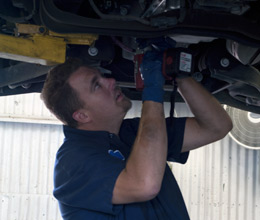
At All Around Auto Repair, our comprehensive vehicle safety inspections are designed to uncover these minor wear items before they leave you stranded on the roadside. We lift the vehicle to check chassis tracking, analyze fluid quality parameters, inspect belt tension, and measure your braking tolerance limits to keep your drive completely dependable and cost-effective.
Your vehicle is constantly communicating through the way it sounds, feels, and performs. Listening to those early warning signs—and acting before a vital component breaks completely—saves you money at the pump, avoids premium towing fees, and protects your family’s safety. If your vehicle has started driving differently, let our experienced team find the cause and bring back your driving peace of mind.
To schedule a comprehensive digital vehicle inspection or an advanced diagnostic scan, please contact All Around Auto Repair today.
📞 (707) 837-0646
📍 1244 Central Ave, Santa Rosa, CA 95401
All Around Auto Repair – Trusted Auto Repair, Maintenance & Diagnostics Since 2001.