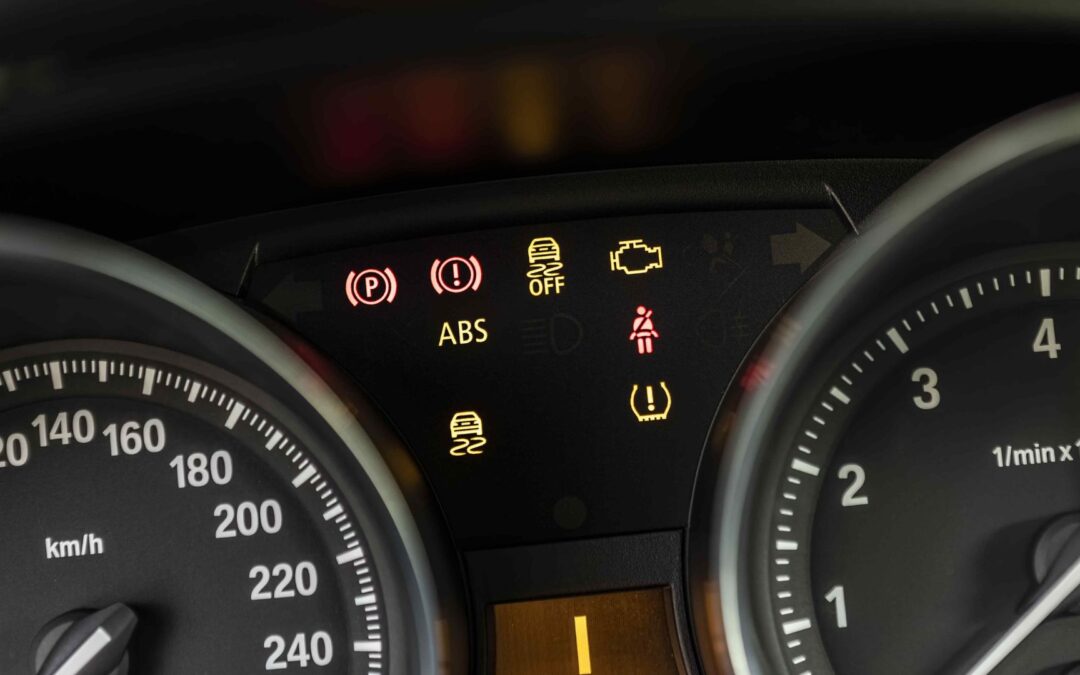
You’re driving to work, running a few minutes late, and that little orange light flickers on your dashboard. You sigh, maybe glance at it for a second, then keep driving. “It’s probably nothing,” you tell yourself.
Sound familiar?
You’re not alone. Many drivers ignore dashboard warning lights, until the problem becomes impossible to overlook. But what starts as a simple alert can easily turn into a major repair bill (or worse, a roadside breakdown).
Let’s take a closer look at what those lights are really trying to tell you, why it’s risky to ignore them, and how a quick diagnostic check at All Around Auto Repair can save you time, money, and stress.
What Warning Lights Actually Mean
Your car’s dashboard is like a messenger between you and your vehicle’s internal systems. Each light is tied to sensors throughout the engine, brakes, transmission, and more, ready to alert you when something isn’t quite right.
Generally, these lights are color-coded, just like traffic signals, to indicate the level of urgency:

Red Lights = Stop Immediately
A red light signals a serious problem that could affect your safety or cause significant engine damage. Continuing to drive could make the issue worse or even dangerous.
Examples include:
- Brake warning light (possible brake failure or low fluid)
- Engine temperature warning (overheating risk)
- Oil pressure warning (low oil pressure or level)
- Battery/charging alert (alternator or electrical problem)
If you see a red light, the safest move is to pull over as soon as possible and call for help, or head straight to your trusted repair shop.
Yellow or Orange Lights = Proceed with Caution
Yellow or orange lights are warning signs, not emergencies. They signal that something needs attention soon but may not require an immediate stop.
Common yellow lights include:
- Check Engine Light (CEL)
- Tire Pressure Monitoring System (TPMS)
- Traction Control or ABS Warning
Ignoring these lights may not cause immediate danger, but it can lead to more expensive problems later if left unchecked.
The Top 3 Warning Lights You Should Never Ignore
Even though dashboard lights vary by make and model, there are a few that every driver should take seriously—no matter what kind of car you drive.
1. The Check Engine Light
This is the most common, and most misunderstood, dashboard light.
When the Check Engine Light comes on, it means your vehicle’s onboard computer (ECU) has detected a problem with the engine, emission system, or another critical component.
The tricky part? It could be something minor like a loose gas cap, or something major like a failing catalytic converter.
If the light is flashing, that’s a sign of a severe issue, such as a misfire that could damage the engine. In that case, stop driving immediately and get a diagnostic test.
If the light is steady, it’s not an emergency, but it still means something’s wrong. Schedule a scan soon to identify and fix the problem before it worsens.
Common causes of the Check Engine Light:
- Loose or damaged gas cap
- Bad oxygen sensor
- Worn spark plugs or ignition coils
- Faulty catalytic converter
- Failing mass airflow sensor
At All Around Auto Repair, our diagnostic tools can pinpoint the issue in minutes, no guessing, no unnecessary part replacements.
2. The Oil Pressure Warning Light
This red icon, usually shaped like an oil can, means your engine isn’t getting enough lubrication. That might sound small, but it’s one of the most critical warnings you can get.
When oil pressure drops, friction between moving parts increases fast. Within minutes, your engine could overheat, seize up, or suffer irreversible internal damage.
If this light comes on:
- Pull over immediately.
- Shut off the engine.
- Check your oil level with the dipstick.
- If it’s low, add oil, but if the light stays on, have your car towed to a shop.
Ignoring this warning is one of the most expensive mistakes a driver can make. A $50 oil fix can easily turn into a $5,000 engine rebuild.
3. The Brake System Warning Light
Your brakes are your car’s most important safety system. When the brake warning light comes on, especially if it’s red, you should pay attention.
This light can mean a few things:
- The parking brake is still engaged.
- Brake fluid is low.
- There’s a problem with the anti-lock braking system (ABS).
- There’s an issue with the hydraulic system.
If the light stays on after releasing the parking brake, don’t risk it. Low brake fluid often means your pads or rotors are worn, and continuing to drive could result in brake failure.
Have a professional inspect the system immediately to ensure your vehicle is safe to drive.

Why Ignoring Warning Lights Gets Expensive
A small problem rarely stays small for long. When you ignore a dashboard warning, you’re giving a minor issue the time it needs to grow, and that’s when repair costs rise fast.
For example:
- A $20 gas cap ignored can lead to a failed emissions test or damage to the evaporative system.
- A worn brake pad that costs $150 to replace can turn into a $600 rotor and caliper job if ignored.
- A small oil leak can eventually destroy the entire engine.
In other words, the light might disappear for a while, but the problem doesn’t fix itself.
Early diagnosis and repair save hundreds (sometimes thousands) of dollars, and keep your car performing safely.
The Value of a Professional Diagnostic Check
Modern cars aren’t like the ones your parents drove. Today’s vehicles are controlled by dozens of electronic modules that communicate with each other through sensors.
That’s why guessing, or relying on cheap scan tools, can lead to wrong conclusions.
At All Around Auto Repair, we use professional-grade diagnostic equipment that connects directly to your car’s onboard computer. In minutes, we can read fault codes, monitor live data, and identify the precise source of the problem.
A proper diagnostic check includes:
- Scanning and reading stored error codes
- Clearing codes after repair and confirming the fix
- Checking related systems (battery, alternator, sensors)
- Testing performance under real-world conditions
Our technicians don’t just read codes, they interpret them, test components, and confirm that the issue is truly resolved before you drive away.
How to Respond When a Light Comes On
Here’s a simple step-by-step approach to stay calm and handle the situation smartly:
- Don’t panic. Not every light means danger, but don’t ignore it either.
- Note the color and behavior. Is it red or yellow? Flashing or steady?
- Check the basics. Look at oil level, coolant, and gas cap if safe to do so.
- Schedule a diagnostic check. Even if the light goes off, the error code is stored in your vehicle’s computer.
- Keep up with maintenance. Many lights appear because scheduled maintenance has been skipped.
By taking quick action, you protect not just your wallet, but also your safety and your car’s long-term performance.

Prevention Is Always Cheaper
Warning lights exist for a reason, to alert you before a problem becomes dangerous or costly. Treat them like a friend, not an enemy.
Scheduling regular maintenance, oil changes, and inspections ensures your car’s systems are always running within safe limits. It’s much easier (and cheaper) to fix a small issue during routine service than to deal with an unexpected breakdown later.
At All Around Auto Repair, we specialize in preventive diagnostics, catching issues early so you don’t have to deal with surprises later.
The Bottom Line
Ignoring warning lights doesn’t make them go away, it just gives the problem time to get worse. Whether it’s your check engine light, oil pressure warning, or brake system alert, these signals are your car’s way of keeping you informed and safe.
When in doubt, get it checked. A simple diagnostic scan can tell you exactly what’s wrong, often in less than 30 minutes.
📞 (707) 837-0646
📍 1244 Central Ave, Santa Rosa, CA 95401
🌐 allaroundautorepair.com
All Around Auto Repair — Repair. Maintenance. Service. Since 2001.
Your trusted partner for honest diagnostics, quality repairs, and preventive care that keeps your car safe all year round.