
You’re driving down the road, music playing, when clunk. That dull thud echoes through the cabin as your car rolls over a bump. You turn down the volume and listen, there it is again. It might sound harmless, but that noise is your car’s way of telling you something’s not right.
Many drivers ignore clunking or knocking sounds, assuming it’s just an old suspension or “normal road noise.” The truth? A clunk under the car is one of the clearest early warning signs that something in your suspension or steering system needs attention.
Left unchecked, what starts as a simple worn part can quickly turn into a dangerous safety issue, or a very expensive repair.
In this blog, we’ll explain what causes those clunks and rattles, how to identify them, and why getting your suspension checked early can save you both money and peace of mind.

Why Your Suspension Makes Noise
Your suspension system is the unsung hero of every ride, it absorbs bumps, keeps your tires in contact with the road, and helps your car handle smoothly. But it’s also one of the hardest-working systems in your vehicle. Every pothole, speed bump, and sharp turn puts stress on its many moving parts.
Over time, that stress wears down rubber bushings, joints, and metal components, creating looseness that leads to, you guessed it, clunking noises.
Here are the most common culprits behind that annoying sound.
1. Worn-Out Struts or Shocks
Struts and shocks are designed to control the movement of your suspension and keep your tires firmly planted on the road. When they wear out, they can no longer properly dampen the motion of the springs.
What it sounds like:
- A heavy clunk or thud when hitting bumps or dips.
- Excessive bouncing after going over a speed bump.
- The front end of the car “diving” when braking.
Why it matters:
Worn shocks or struts don’t just make noise, they reduce your car’s ability to stop quickly and handle safely. That can mean longer braking distances and reduced control during cornering or emergency maneuvers.
Fix:
If you notice this, it’s time for a suspension inspection. Replacing struts or shocks before they completely fail can prevent wear on your tires and other suspension components.
2. Bad Sway Bar Links or Bushings
The sway bar (also called an anti-roll bar) keeps your car stable when cornering. It’s connected to the suspension on both sides through small joints called sway bar links and rubber bushings.
What it sounds like:
- A rhythmic clunking or rattling noise over small bumps.
- Noise that gets louder when turning.
Why it matters:
Loose or broken sway bar links don’t necessarily make your car unsafe right away, but they do affect stability and comfort. Eventually, they can cause uneven tire wear and additional strain on suspension parts.
Fix:
Replacing sway bar links or bushings is relatively inexpensive, and doing it early can prevent bigger issues.
3. Worn Ball Joints
Ball joints connect your car’s control arms to the steering knuckles, allowing your wheels to move up and down and turn left or right. Over time, these joints can loosen or dry out.
What it sounds like:
- A distinct metallic clunk when going over bumps or turning.
- A feeling of looseness in the steering wheel.
- Uneven tire wear.
Why it matters:
This one’s serious. A completely worn-out ball joint can separate while driving, causing a loss of control and potentially a wheel collapse.
Fix:
If a mechanic suspects a bad ball joint, get it replaced immediately. It’s a small part with a big safety impact.
4. Control Arm Bushings or Mounts
Control arms connect the wheel hubs to the frame of your car. The rubber bushings at each end allow movement and absorb vibration. As these rubber parts age, they dry out, crack, or separate from their metal housing.
What it sounds like:
- A dull thump or clunk from underneath the car, especially when accelerating, braking, or hitting rough roads.
- You may also feel the steering wheel “shift” slightly during turns.
Why it matters:
Bad control arm bushings can throw off your alignment, accelerate tire wear, and reduce braking stability.
Fix:
A technician can inspect the bushings for cracks or tears. Replacing them early restores ride comfort and steering precision.
5. Loose or Broken Suspension Mounts
Shock mounts and strut mounts secure your suspension components to the vehicle’s frame. When they wear out or crack, they allow excess movement that causes knocking or rattling noises.
What it sounds like:
- A sharp clunk when turning the steering wheel or driving over potholes.
- The noise may come from one specific corner of the car.
Why it matters:
Loose mounts can quickly lead to more expensive suspension damage or unsafe handling.
Fix:
Replacing a mount is usually far cheaper than waiting until it fails and damages other parts.
6. Something Simple: Loose Bolts or Components
Sometimes, the culprit isn’t a worn part, it’s something as simple as a loose bolt, heat shield, or undercarriage component.
If you’ve recently had work done on your suspension, brakes, or exhaust, a missing fastener could be behind the noise.
Fix:
A professional inspection can identify and tighten anything that’s rattling before it becomes a real issue.

Why Ignoring Suspension Noise Costs More Later
A clunking noise might not seem urgent, but it’s often the first and only warning your car gives before a component fails. Suspension parts wear gradually, and the sound you’re hearing is the result of metal parts beginning to move where they shouldn’t.
Here’s why early inspection matters:
- Prevent cascading wear: One loose bushing or link can stress nearby components, doubling or tripling repair costs.
- Protect your tires: Bad suspension leads to uneven wear, meaning you’ll need new tires sooner.
- Avoid safety risks: A failed ball joint or control arm can cause sudden steering loss.
- Keep your alignment intact: Worn suspension parts knock your wheels out of alignment, hurting both handling and fuel efficiency.
How Mechanics Diagnose a Clunk
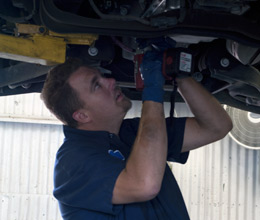
At All Around Auto Repair, we use a combination of visual inspection, road testing, and specialized tools to pinpoint the source of any noise.
A typical diagnostic includes:
- A test drive to replicate the noise and identify when it happens, over bumps, during turns, or while braking.
- Lifting the vehicle to inspect suspension components for looseness, leaks, or wear.
- Checking torque on key fasteners like strut bolts and control arm mounts.
- Inspecting bushings, joints, and mounts for cracking or movement.
Once we identify the cause, we explain the problem clearly, show you the worn part (if possible), and recommend the best, most affordable fix.
Can You Drive with a Clunking Noise?
Technically, yes, you can. But should you? Absolutely not.
Even if your car feels fine now, every mile with a loose or failing suspension part increases the chance of something worse happening. You might lose steering precision, blow a tire from misalignment, or cause more wear on parts that were fine before.
In short: the sooner you get it checked, the cheaper and safer the fix will be.
Proactive Suspension Care Tips
- Listen and feel: Any new noise, vibration, or change in handling deserves attention.
- Inspect tires regularly: Uneven tread can signal suspension trouble.
- Get seasonal checks: After winter or heavy pothole season, schedule a quick suspension inspection.
Avoid overloading your vehicle: Extra weight accelerates suspension wear.

Final Thoughts
That clunk when you hit a bump isn’t just background noise, it’s your car’s cry for help. The suspension system is built to handle rough roads quietly. When it starts making noise, something’s loose, worn, or broken.
The good news? Most suspension problems are straightforward and affordable to fix, if you catch them early.
So the next time your car starts knocking, don’t turn up the radio. Bring it to the experts at All Around Auto Repair for a professional inspection. We’ll find the source, fix it right, and make sure you get back to smooth, quiet driving.
📞 (707) 837-0646
📍 1244 Central Ave, Santa Rosa, CA 95401
🌐 allaroundautorepair.com
All Around Auto Repair — Repair. Maintenance. Service. Since 2001.
Your trusted Santa Rosa mechanics for suspension diagnostics, repairs, and safety checks. Schedule your Suspension Inspection today and stay in control of your ride.