
It’s a tiny moment, but once you notice it, you can’t unfeel it. You press the gas pedal expecting a smooth, immediate response, but instead there’s a brief pause. Just a fraction of a second. The engine seems to think before reacting. Then everything continues normally.
The car still drives. It still accelerates. There are no warning lights, no loud noises, nothing dramatic. But that hesitation is there. Many drivers ignore it, especially because it feels so small. It’s easy to assume it’s normal or just a one-time occurrence. But that split-second delay is often one of the earliest signs that something in your vehicle is not responding as quickly or efficiently as it should.
And like most early symptoms, it rarely stays the same.

The Complex Chain of Drive-by-Wire Technology
To understand what’s happening, it helps to look at how modern vehicles respond to your input. When you press the gas pedal in a modern car, you are not directly controlling the engine. Instead, you are sending an electronic signal through what’s called a drive-by-wire system. The car’s computer interprets your input and decides how much throttle to apply, how much fuel to inject, and how the transmission should respond. All of this happens in milliseconds.
When everything is working perfectly, the process feels instantaneous. But if any part of that chain slows down or becomes less precise, even slightly, you feel it as hesitation. This electronic lag is a primary reason why getting precise vehicle diagnostics is critical to pinpointing the exact sensor or module causing the latency.
Airflow Restrictions and Carbon Contamination
One of the most common causes of this delay is throttle response. The throttle body controls how much air enters the engine. Over time, it can accumulate carbon buildup, especially in vehicles that are frequently driven in stop-and-go traffic. This buildup restricts airflow and affects how quickly the throttle can respond.
When you press the gas pedal, the system may take slightly longer to adjust airflow, resulting in that momentary delay before acceleration begins. It’s subtle at first, but it can become more noticeable over time, showing why keeping up with your routine auto maintenance can keep the intake tract clean and responsive.
Airflow sensors also play a major role. Sensors like the mass airflow (MAF) sensor monitor how much air is entering the engine. If the sensor is dirty or starting to degrade, it may send slightly inaccurate data. According to engine performance reviews published by ASE (National Institute for Automotive Service Excellence), a microsecond delay in MAF data streaming can stall the engine control computer’s calculations just long enough to cause a tangible flat spot during initial acceleration.

Fuel Spray Patterns and Transmission Logic Delays
Fuel delivery is another critical part of the equation. Fuel injectors are responsible for delivering fuel in a precise spray pattern. When injectors are clean, combustion happens efficiently. But as deposits build up, the spray pattern can become less consistent, affecting how quickly the engine responds to changes in throttle input. Instead of immediate acceleration, you get a slight hesitation.
The transmission can also contribute to this feeling. In automatic vehicles, the transmission decides which gear to use based on speed, throttle input, and load. When you press the gas pedal, the system may need to downshift before delivering more power. Technical data compiled by SAE International confirms that modern fuel-efficiency programming intentionally delays transmission downshifts during light acceleration, but this lag can become dramatically worse if degraded fluid causes hydraulic pressure drops inside the valve body. If you feel this lag frequently, a professional transmission service and repair inspection is highly recommended.

Ignition Wear and the Danger of Postponing Repairs
Ignition performance is another factor. Spark plugs and ignition coils are responsible for igniting the air-fuel mixture. As spark plugs wear out, the spark becomes weaker. This can slow down combustion slightly, especially under sudden load when cylinder pressures spike. The engine still runs, but it may fail to snap into action instantly.
One of the reasons this issue is often ignored is because it doesn’t feel urgent. The car still works, but internally, the system is compensating. When one component doesn’t respond perfectly, other parts of the system adjust to maintain performance, placing additional strain on surrounding components. Safety advisories published by Consumer Reports warn that ignoring minor engine hesitations can lead to unburned fuel entering the exhaust system, which gradually destroys expensive emissions components like catalytic converters.
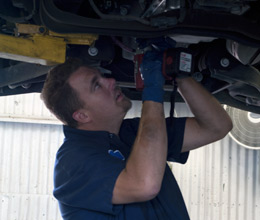
At All Around Auto Repair, hesitation issues are approached by evaluating the entire system. Technicians check airflow components, inspect the throttle body, evaluate fuel delivery, analyze sensor data, and assess transmission behavior. This comprehensive approach ensures that the root cause is identified.
Your car is designed to respond instantly to your input. When it doesn’t, even slightly, it’s a signal. It may not be urgent, but it’s not random. Small changes in response are often the first signs of larger issues developing. If your car hesitates when you press the gas pedal, let our experienced technicians restore the crisp, dependable response your vehicle was built to have.
To schedule an advanced drive-by-wire diagnostic or an engine performance check, please contact All Around Auto Repair today.
📞 (707) 837-0646
📍 1244 Central Ave, Santa Rosa, CA 95401
All Around Auto Repair – Repair. Maintenance. Service. Since 2001.