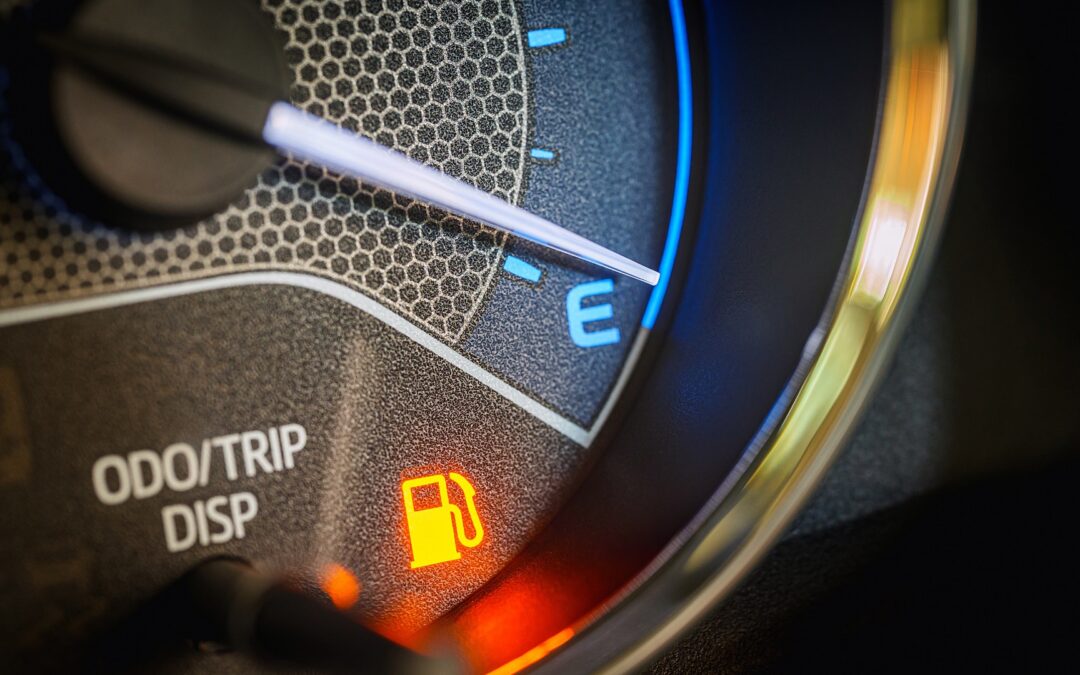
Almost every driver has done it at some point. The fuel light comes on, and instead of heading straight to the gas station, you keep driving. Maybe you’re close to your destination. Maybe you think you still have enough range. Maybe it’s just not convenient to stop. It feels harmless.
After all, the car is still running, the engine sounds normal, and nothing seems wrong. But what many drivers don’t realize is that running your car consistently with the fuel light on can quietly affect several critical components inside your vehicle.
Your car doesn’t just “run low on gas.” There’s a chain of processes happening inside the fuel system, and when fuel levels drop too low, those processes don’t work the way they were designed to.

The Fuel Pump Thermal Submersion Principle
At the center of this system is your fuel pump. The fuel pump is responsible for sending fuel from the tank to the engine at the correct pressure. In most modern vehicles, the fuel pump is located inside the fuel tank itself. This design helps keep the pump cool and properly lubricated, because it is surrounded by liquid fuel.
When your tank is full or even half full, the fuel pump is submerged and operating under ideal conditions. The fuel acts as both a coolant and a lubricant, protecting the internal components of the pump from excessive heat and wear. When the fuel level drops too low, that protection starts to disappear.
With less fuel in the tank, the pump is no longer fully submerged. This means it has less cooling and less lubrication, causing it to run hotter. Technical structural research managed by SAE International confirms that running a fuel pump electric motor without complete liquid fuel submersion causes immediate thermal spikes in the armatures, accelerating mechanical wear and leading to sudden low-pressure drops that require advanced vehicle diagnostics to safely measure.
Debris Sludge Ingestion and Fuel Injector Plugging
But the fuel pump thermal wear is only part of the story. Inside your fuel tank, small particles, rust flakes, and tank scale sediment accumulate over time. Under normal conditions, these particles settle harmlessly at the bottom of the tank and stay relatively undisturbed. However, when your fuel level is low, the liquid sloshing is accelerated, stirring up the sediment right at the pump inlet strainer.
Your vehicle does have a fuel filter designed to catch these particles, but filters are not meant to handle excessive, concentrated contamination. When more debris is continuously introduced into the system, the filter can become clogged faster than expected. A restricted filter chokes fuel flow, which causes sudden hesitation during acceleration or hard starting problems. If this stress patterns recur often, scheduling a comprehensive routine auto maintenance interval is the best way to swap clogged inline filters before engine fuel starvation occurs.

Air Suction Inconsistencies and EVAP Vapor Errors
As fuel levels drop close to zero, the pump may begin to draw in small pockets of air along with the remaining fuel. This breaks the hydraulic line pressure, creating instant fluctuations in how the engine receives its fuel charge. The result may be severe misfires or stalling, especially during sharp cornering or steep hill climbing when the low fuel sloshes completely away from the pick-up boot.
Beyond the immediate mechanical components, driving on empty also places stress on your vehicle’s evaporative emissions (EVAP) system. With an empty tank, the internal volume of flammable fuel vapor expands significantly, forcing the carbon canister and purge valves to process higher pressure loads. Consumer protection updates published by Consumer Reports caution that repeated empty-tank driving frequently triggers false or real evaporative emissions leak codes on your dashboard, forcing car owners to undergo targeted emission checks that could have been avoided by simply keeping the tank above the quarter-full mark.

Inaccurate Range Estimates and Complete Fuel Starvation Risks
Many drivers rely heavily on the “miles to empty” display on their dashboard. While this feature is helpful, it is only an estimate calculated from recent driving style matrices. Sudden traffic bottlenecks, rolling hills, or aggressive highway overtaking can drastically drop your true remaining range. Road hazard assistance statistics compiled by the American Automobile Association (AAA) reveal that thousands of highway breakdown calls annually stem from drivers pushing their electronic range displays to zero, completely running dry and stranding themselves in dangerous highway merging lanes.
Running out of fuel completely introduces severe complications. When the engine cuts out from fuel starvation, the lines lose all hydraulic pressure. Re-starting the car after adding gas isn’t always as simple as turning the key; the dry pump must labor intensely to prime the long lines, risking motor burnout. Uncovering hidden damage or verifying line pressure integrity after a hard dry stall requires expert auto inspections to rule out internal pump damage.
At All Around Auto Repair, fuel system issues are often traced back to driving habits. Keeping the fuel level above a quarter tank helps ensure that the pump stays properly cooled and lubricated, and that debris remains undisturbed at the bottom of the tank. Preventive care is always more affordable than reactive repairs.
Your car may seem fine when the fuel light comes on, but internally, it is operating under less-than-ideal conditions. Paying attention to that small warning light and treating it as more than just a suggestion can make a real difference in your vehicle’s long-term reliability. If your car has been running rough, lagging, or stalling after a low-fuel event, let our experienced team diagnose the underlying cause before a minor issue turns into a total fuel pump failure.
To schedule a professional fuel system pressure test or a comprehensive multi-point safety check, please contact All Around Auto Repair today.
📞 (707) 837-0646
📍 1244 Central Ave, Santa Rosa, CA 95401
All Around Auto Repair – Repair. Maintenance. Service. Since 2001.