Most drivers don’t think much about a small coolant leak. Maybe you’ve noticed the coolant reservoir needs topping up every few weeks, caught a sweet smell after a drive, or seen a small puddle under your vehicle that disappears overnight. Since the temperature gauge stays within the normal range and the car seems to run perfectly fine, it’s easy to put the issue on the back burner.
The problem is that coolant leaks rarely fix themselves. What starts as a minor seep can gradually develop into a major mechanical failure, leading to expensive repairs or even complete engine damage. Your vehicle’s cooling system is responsible for keeping the engine operating at a safe temperature. As the engine runs, it generates tremendous heat. Coolant absorbs that heat and carries it through the radiator, where it is released before circulating back through the engine block.
When coolant begins to leak, even in small amounts, the system becomes less effective. Over time, the engine loses its ability to regulate temperature properly, increasing the risk of sudden overheating and internal component damage.

Thermal Expansion, Aluminum Warp, and Head Gasket Failure
One reason coolant leaks are so dangerous is that they often develop slowly. Early warning signs like a dropping reservoir level, a sweet aroma coming from the engine bay, or reduced heater core performance are incredibly easy to miss. Because the symptoms seem minor, many drivers choose to monitor the situation rather than schedule an immediate inspection. Unfortunately, this delay allows air to enter the cooling lines, creating localized pockets that completely interrupt fluid circulation.
Modern engines are built with tight tolerances and lightweight aluminum cylinder heads. Excessive heat causes these metals to expand rapidly beyond their designed physical limits. Technical thermodynamics papers published by SAE International outline how unmitigated thermal stress leads to structural cylinder head warping, destroying the flat surface deck and triggering a severe blown head gasket failure. If you smell sweet vapor after a commute, catching the drop early through targeted vehicle diagnostics can protect your engine from warping.
When a head gasket fails, the separation barrier between your combustion chambers, oil passages, and cooling ports breaks down. This allows pressurized coolant to flood your crankcase, mixing with engine oil into a milky sludge that strips away critical lubrication. What may have started as a simple rubber hose replacement can quickly turn into a total engine replacement.

Chemical Corrosion, Pump Seal Wear, and Windshield Defrost Hazards
Leaking coolant doesn’t only affect internal engine temperatures. As ethylene glycol escapes and dries, it leaves behind highly corrosive crystalline deposits that actively degrade nearby rubber drive belts, plastic electrical connectors, and wiring looms. Additionally, low coolant volume directly starves the water pump. Because the chemical properties of coolant double as an internal lubricant for the water pump’s spinning shaft seals, running the system low causes the pump to overheat, seize, or leak aggressively from its weep hole.
You might also notice your passenger cabin heater acting inconsistently. Low fluid prevents hot coolant from filling your dash heater core, causing cold air to blow from your vents. Consumer driving alerts analyzed by Consumer Reports emphasize that a cold heater core compromises your windshield defrost capabilities during winter mornings, creating a severe visibility hazard that directly impacts on-road safety. Making sure your radiator cap and hoses are fully secure during your routine auto maintenance checkpoints keeps your cabin clear and safe.

Evaporative Hidden Drops and Environmental Toxins
Not all cooling leaks leave obvious puddles on your driveway. Many cracks only expand when the system reaches full operational pressure, spraying a fine mist onto hot exhaust manifolds where it evaporates instantly without hitting the ground. Repeatedly adding fluid without fixing the root leak allows fresh oxygen to enter the loop, accelerating scale formation and corrosion inside your radiator channels.
There is also an environmental aspect to address. Engine coolant contains ethylene glycol, an incredibly toxic chemical that carries a naturally sweet scent and taste. Environmental safety briefs released by the American Automobile Association (AAA) warn that unattended driveway coolant drips pose a lethal threat to neighborhood pets and wildlife attracted to the pools, making prompt repairs a civic responsibility as well as a mechanical priority.
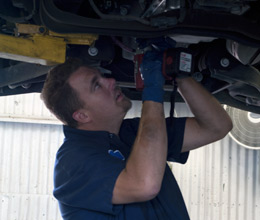
At All Around Auto Repair, our technicians evaluate your cooling network under pressure. We perform comprehensive inspections—including cooling system pressure tests, chemical block testing for combustion gases, and component evaluations to trace hairline leaks before they leave you stranded. Replacing a thermostat housing, a worn hose, or a loose clamp early is far more affordable than managing a major engine rebuild down the line.
Your cooling system is your engine’s primary defense against catastrophic heat destruction. If your reservoir fluid is dropping, your vents are blowing cold, or you catch a hint of a sweet smell after parking, let our experienced technicians pressure-test your system and keep your drive completely dependable.
To schedule a professional cooling system pressure check or a comprehensive multi-point health inspection, please contact All Around Auto Repair today.
📞 (707) 837-0646
📍 1244 Central Ave, Santa Rosa, CA 95401
All Around Auto Repair – Repair. Maintenance. Service. Since 2001.