Modern cars are far more intelligent than many drivers realize. Today’s vehicles don’t just respond to your inputs in real time. They observe, adapt, and learn from how you drive. Over time, your car builds a profile of your habits, adjusting engine response, transmission behavior, steering feel, and even braking assistance to match your style.
In most cases, this adaptive technology improves comfort, efficiency, and performance. But when something changes, like a new driver, a battery replacement, or a developing mechanical issue, those learned behaviors can actually cause drivability problems that feel confusing and unpredictable.
Understanding how your car learns your driving style helps explain why it may suddenly feel sluggish, jerky, unresponsive, or inconsistent even when no warning lights are on.

How Your Vehicle Learns Your Driving Habits
Modern vehicles rely on multiple control modules that constantly collect data. The engine control module (ECM), transmission control module (TCM), body control module (BCM), and steering systems all communicate through a localized data network. Together, they analyze throttle input, braking habits, acceleration patterns, idle behavior, and driving conditions.
Over time, this data is used to optimize how the car behaves. For example, gentle acceleration can lead to earlier transmission shifts for improved fuel economy, while aggressive driving causes the transmission to hold gears longer and sharpen throttle response. Many drivers never notice this happening because it occurs gradually in the background.
When Adaptive Learning Causes Problems
Problems arise when the learned behavior no longer matches reality. One common trigger is a battery replacement or sudden power disconnection. When power is lost, volatile RAM inside many control modules resets, wiping out long-term adaptive memory entirely. After power is restored, the vehicle reverts to its harsh factory-default maps, which can manifest as a fluctuating idle or poorly timed gear shifts. Uncovering why a car acts erratic post-battery service often requires running a targeted vehicle diagnostics scan to check the adaptation baselines.
Another common scenario involves shifts in driving environments. A driver who spends years cruising on wide-open highways may suddenly face a new daily commute through cramped city blocks. The vehicle’s adaptive software continues applying high-speed highway logic to low-speed, stop-and-go conditions, creating temporary throttle hesitation or lag. The vehicle isn’t broken; it is simply applying learned parameters that no longer fit the baseline environment.

The Impact of Mechanical Wear and Electronic Throttle Drift
Mechanical wear plays a major role in software adaptation anomalies. As mechanical components age, internal sensors drift. The vehicle attempts to compensate by adjusting its learned long-term fuel trim or solenoid pressure values. However, if a throttle body accumulates sticky carbon varnish, the computer’s learned mapping fails to keep up with the physical restriction, resulting in jerky low-speed acceleration. Keeping the mechanical intake clear through scheduled routine auto maintenance ensures the computer’s algorithms correspond with actual mechanical movement.
This conflict is particularly evident in modern drive-by-wire electronic throttle layouts. Because there is no physical cable linking the gas pedal to the engine, the throttle plate’s angle is determined entirely by software interpretation. Industry position papers archived by SAE International reveal that when adaptive mapping encounters unexpected voltage spikes from a worn pedal potentiometer, the ECM intentionally slows down throttle response as a failsafe, causing the sluggish pedal feel that car owners frequently misinterpret as a mechanical engine fault.
Why Transmission Behavior Changes and Safety Implications
Transmission behavior is heavily influenced by software adaptations. Modern automatic gearboxes utilize adaptive pressure control to alter how quickly internal fluid fills the clutch packs. When transmission fluid breaks down or internal bands experience natural wear, the TCM continuously increases line pressures to keep shifts feeling smooth. However, if you neglect standard fluid intervals, these adaptive pressure shifts hit a hard programming ceiling, causing abrupt clunks, delayed gear engagement, or a slipping sensation between gears. Addressing these shifting delays early via professional transmission service and repair avoids accelerated clutch material burnout.

Why Warning Lights Don’t Always Appear
One of the most frustrating aspects of adaptation-related issues is that they frequently occur without triggering a Check Engine Light. Because sensors are technically operating within wide safety thresholds, the computer registers the performance drop as a normal correction rather than a component failure. Consumer research data compiled by Consumer Reports cautions that letting a car continuously struggle against poor software adaptations places parastic strain on engine mounts and shortens catalytic converter lifespan due to uneven fuel delivery, converting a minor software calibration issue into a costly multi-system fix.
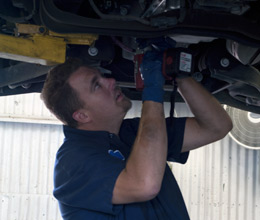
At All Around Auto Repair, technicians don’t just search for trouble codes. They look at live sensor data frequencies, review long-term adaptive memory blocks, and evaluate the powertrain under real-world conditions. In many cases, the solution involves clearing out corrupted adaptive memory logs and executing a controlled, digital relearn sequence alongside simple, physical service procedures like cleaning the throttle body plates.
Your vehicle is engineered to provide a smooth, intuitive, and responsive driving experience. If your car has started shifting erratically, lagging off the line, or acting unpredictable after a battery swap or lifestyle change, let our experienced team diagnose the underlying cause and realign your vehicle’s software with mechanical reality.
To schedule a professional electronic adaptation reset or a comprehensive multi-point drivability health check, please contact All Around Auto Repair today.
📞 (707) 837-0646
📍 1244 Central Ave, Santa Rosa, CA 95401
All Around Auto Repair – Repair. Maintenance. Service. Since 2001.