Your Car Takes Longer to Stop Than It Used To: What Could Be Wrong?
Your vehicle’s braking performance usually changes gradually.
At first, you might notice that you need to press the brake pedal a little harder. Maybe the car takes slightly longer to come to a complete stop, or the brakes simply don’t feel as responsive as they once did.
Because the change happens slowly, it can be easy to get used to it.
But increased stopping distance should never be considered normal. Your braking system is one of the most important safety systems in your vehicle, and changes in braking performance can indicate worn components, hydraulic problems, tire issues, or other conditions that need attention. Official vehicle safety guidelines from the NHTSA emphasize that maintaining optimal brake responsiveness is critical for collision prevention.
Understanding what causes longer stopping distances can help you recognize a developing brake problem before it becomes a serious safety concern.
1. Your Brake Pads May Be Worn
Brake pads are designed to wear down over time.
Every time you press the brake pedal, the pads create friction against the brake rotors to slow the vehicle. Eventually, the friction material becomes thinner and needs replacement.
Possible signs of worn brake pads include:
- Longer stopping distances
- Squealing while braking
- Grinding noises
- Reduced braking response
- Brake warning indicators on some vehicles
Waiting too long to replace worn brake pads can also damage the rotors and increase the cost of the repair. Scheduling regular vehicle inspections can help identify pad wear before braking performance becomes significantly affected.
2. Brake Rotors May Be Worn or Damaged
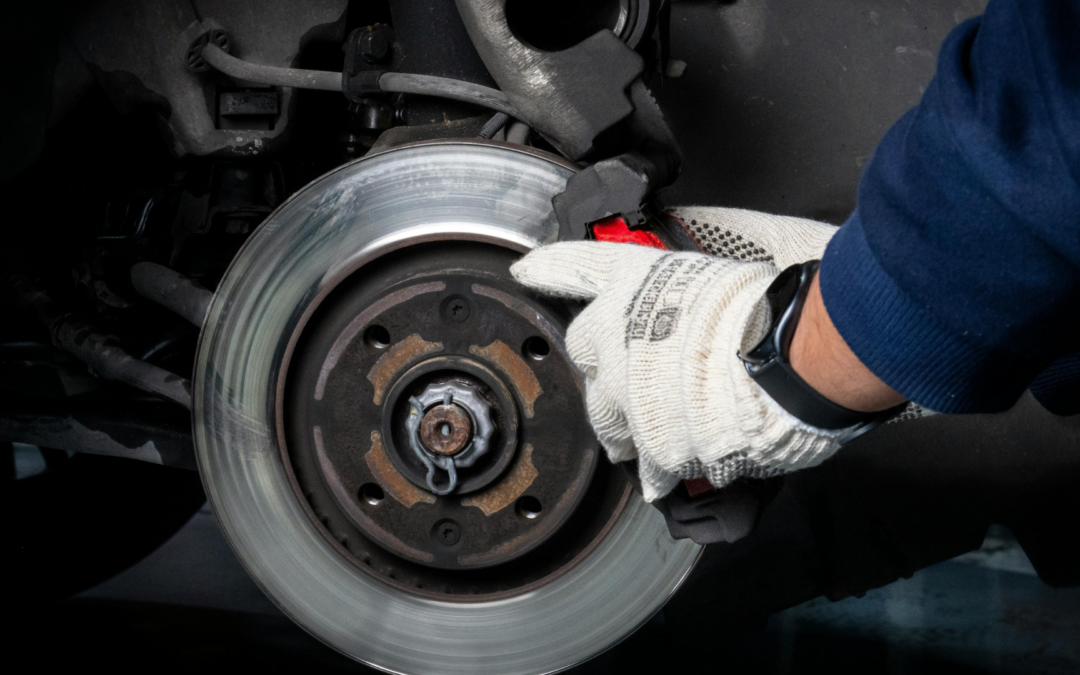
Brake rotors provide the surface that brake pads press against to slow your vehicle.
Over time, rotors can develop:
- Uneven wear
- Excessive thinning
- Heat-related damage
- Grooves
- Surface irregularities
When rotors are no longer in proper condition, the brake pads may not make consistent contact with them. You may notice reduced braking performance, vibration through the steering wheel, or pulsation through the brake pedal. A professional brake inspection can determine whether the rotors are still within specification or need replacement.

3. Old Brake Fluid Can Affect Braking Performance
Brake fluid transfers hydraulic pressure from the brake pedal to the brakes at each wheel. Over time, brake fluid can absorb moisture. As contamination increases, the fluid’s boiling point decreases. Under heavy braking, this can contribute to reduced braking performance and changes in pedal feel.
Old or contaminated brake fluid may contribute to:
- Soft or spongy brake pedal
- Inconsistent braking
- Reduced braking response
- Poor performance during repeated braking
Brake fluid condition should be checked periodically and serviced according to the vehicle manufacturer’s recommendations. As noted by brake maintenance experts at AAA Auto Repair, flushing degraded brake fluid preserves hydraulic component longevity.
4. Air May Be Trapped in the Brake Lines
Your braking system relies on hydraulic pressure. Brake fluid does not compress easily, which allows pressure from your foot to be transferred efficiently to the brakes. Air is different. If air enters the brake lines, it can compress when you press the pedal, reducing the effectiveness of the hydraulic system.
A common symptom is a brake pedal that feels soft or spongy.
Air can enter the system because of:
- Improper brake service
- Low brake fluid
- Hydraulic leaks
- Component replacement
- Problems within the braking system
Bleeding the brake system correctly removes trapped air, but technicians should also determine why air entered the system in the first place.
5. A Brake Caliper Could Be Sticking
Brake calipers apply pressure to the brake pads when you press the pedal. If a caliper begins sticking or fails to operate correctly, braking force may become uneven.
Possible symptoms include:
- Vehicle pulling while braking
- Uneven brake pad wear
- Burning smell near a wheel
- Excessive heat from one wheel
- Reduced braking performance
A sticking caliper can also cause the brake pad to remain partially applied after you release the pedal, creating additional heat and premature wear. Incorporating these checks into your routine auto maintenance protects your brake system from uneven damage.
6. Your Tires May Be Part of the Problem
Brakes can only stop your vehicle effectively if the tires can maintain traction with the road. Even a perfectly functioning brake system may require more distance to stop if the tires are worn or improperly inflated.
Stopping distance can be affected by:
- Low tread depth
- Uneven tire wear
- Incorrect tire pressure
- Aging tires
- Poor-quality or inappropriate tires
- Wet or slippery road conditions
This is why a complete brake-related inspection should consider tire condition as well as the braking system itself.

7. A Brake Booster Problem Can Change Pedal Feel
Most modern vehicles use a brake booster to reduce the amount of effort required to press the brake pedal. If the booster or its related components develop a problem, you may notice that the pedal becomes unusually hard and requires much more force.
Possible symptoms include:
- Hard brake pedal
- Increased effort required to stop
- Longer stopping distance
- Changes in engine behavior when braking on some vehicles
Because several problems can create similar symptoms, professional diagnosis is important before replacing any components.
8. Hydraulic Problems Can Reduce Braking Force
Your brake system contains multiple hydraulic components, including the master cylinder, brake lines, hoses, and calipers or wheel cylinders. A problem anywhere in this system can affect braking performance.
Potential issues include:
- Brake fluid leaks
- Failing master cylinder
- Damaged brake hoses
- Corroded brake lines
- Internal hydraulic problems
If brake fluid is leaking, the system may gradually lose the pressure needed to stop the vehicle effectively. Detailed technical guides on Car and Driver point out that hydraulic pressure loss is among the most urgent mechanical failures a driver can face.
9. ABS Problems Can Affect How the Vehicle Brakes
The Anti-lock Braking System (ABS) helps prevent wheel lockup during hard braking. A problem with an ABS sensor, wiring, hydraulic control unit, or another related component may trigger an ABS warning light.
An illuminated ABS light does not always mean the basic braking system has completely failed, but it does indicate that an important safety system needs attention. If both the ABS and brake warning lights appear—or braking performance has changed—the vehicle should be inspected as soon as possible.
Why Stopping Distance Can Get Worse Gradually
One reason brake problems are easy to overlook is that drivers adapt. You may begin pressing the pedal slightly earlier or applying more pressure without consciously realizing it. Eventually, what once felt like normal braking requires noticeably more distance.
This gradual change is why preventive brake inspections are so valuable. Technicians can identify worn components before they create obvious symptoms or compromise braking performance.
When Should You Stop Driving?
Some brake symptoms require immediate attention.
Avoid unnecessary driving and have the vehicle evaluated if you notice:
- Brake pedal sinking toward the floor
- Sudden loss of braking performance
- Brake fluid leaking
- Loud grinding noises
- Significant pulling during braking
- Brake warning light combined with poor braking
- Smoke or strong burning odor from a wheel
- Dramatically increased stopping distance
Brake problems can progress quickly, and delaying repairs may put you and other drivers at risk.

Why a Complete Brake Inspection Matters
Replacing brake pads isn’t always enough to solve poor braking performance. A proper inspection should evaluate the braking system as a whole.
At All Around Auto Repair, technicians can inspect:
- Brake pads
- Brake rotors
- Calipers
- Brake fluid
- Brake hoses and lines
- Master cylinder-related concerns
- ABS components when necessary
- Tires and related wear patterns
This comprehensive approach helps identify the actual cause of reduced braking performance rather than simply replacing the most obvious component.
Early Brake Service Can Save Money
Waiting until you hear grinding or experience significant braking problems often means additional components have already been damaged.
For example, replacing worn brake pads at the appropriate time may protect the rotors from unnecessary damage. Addressing a sticking caliper early may prevent excessive heat and uneven wear. Identifying a fluid or hydraulic problem before braking performance becomes severely affected can help prevent a much more serious situation.
Preventive brake service isn’t only about saving money—it’s about maintaining predictable stopping performance.
Final Thoughts
If your car takes longer to stop than it used to, don’t assume it’s simply because the vehicle is getting older.
Worn brake pads, damaged rotors, contaminated brake fluid, hydraulic problems, sticking calipers, worn tires, or brake booster issues can all affect stopping distance. The important thing is identifying the cause before braking performance becomes significantly compromised.
If your brakes feel different, require more pressure, make unusual noises, or simply don’t stop the vehicle as confidently as they once did, feel free to contact our expert technicians at All Around Auto Repair and schedule a brake inspection today!
📞 (707) 837-0646
📍 1244 Central Ave, Santa Rosa, CA 95401
🌐 allaroundautorepair.com
All Around Auto Repair – Repair. Maintenance. Service. Since 2001.