Your Car Makes a Clunk When You Accelerate or Let Off the Gas: What Could Be Wrong?
A clunk from underneath your vehicle can be easy to dismiss, especially when the car still seems to drive normally.
Maybe you hear a single “clunk” when accelerating from a stop. Perhaps it happens when you suddenly release the gas pedal. Or you might notice it when shifting from Park into Drive or Reverse.
These sounds aren’t something you should automatically consider normal. According to diagnostic guidance on Car and Driver, a distinct clunk under load changes usually points to excessive play within the drivetrain, engine mounts, or suspension joints.
A clunk during acceleration or deceleration often means that something in the engine mounts, transmission mounts, drivetrain, suspension, or related components has excessive movement or wear. Here are some of the most common reasons your car may clunk when you accelerate or let off the gas.
1. Worn Engine Mounts
Your engine isn’t mounted directly to the vehicle’s frame without any movement. Engine mounts secure the engine while also helping absorb vibration and control movement as the engine produces torque.
Over time, mounts can crack, tear, collapse, or lose their ability to control engine movement. When you accelerate, the engine naturally moves slightly as torque increases. A worn mount may allow excessive movement, creating a noticeable clunk.
Other symptoms can include increased vibration at idle, a thump when accelerating, clunking when shifting into Drive or Reverse, and excessive engine movement. A thorough vehicle inspection helps confirm whether engine or transmission mounts are failing.
2. Worn Transmission Mounts
The transmission is also supported by mounts designed to keep it positioned correctly while controlling vibration and movement. A damaged transmission mount can allow the transmission to move excessively when torque changes.
You may notice clunking during acceleration, a thump when releasing the gas, clunking when changing gears, increased vibration, or movement when shifting between Drive and Reverse.

3. CV Axle or CV Joint Problems
CV axles transfer power from the transmission to the wheels while allowing the suspension and steering to move. Wear in a CV joint can create unwanted movement or noise when power is applied.
Possible symptoms include clunking during acceleration or deceleration, clicking while turning, vibration under acceleration, grease around the inside of a wheel, or a damaged CV boot. Outer CV joint problems are commonly associated with clicking while turning, while inner CV joint wear can create symptoms during acceleration and changes in drivetrain load.
4. Worn U-Joints
On vehicles equipped with driveshafts and universal joints, worn U-joints can create noticeable drivetrain play. When you press the accelerator, torque is applied through the drivetrain; when you release it, the load changes direction. As noted in repair resources on AAA Auto Repair, excessive U-joint slop produces a sharp clunk during load transitions.
5. Driveshaft Problems
The driveshaft transfers power through the drivetrain on many rear-wheel-drive, four-wheel-drive, and all-wheel-drive vehicles. Problems involving driveshafts, U-joints, center support bearings, couplings, or mounting points can produce severe clunking and vibration. Safety advisories from the NHTSA remind drivers that driveline failures require urgent repair to protect vehicle safety.

6. Excessive Drivetrain Play
Small amounts of movement between drivetrain components can be normal, but excessive wear creates too much free play. When you press or release the accelerator, that play is suddenly taken up as torque shifts, resulting in a clunk.
7. Differential Problems
The differential transfers power while allowing the drive wheels to rotate at different speeds when turning. Wear or excessive play inside the differential or its related mounts can create a clunk when accelerating from a stop, suddenly applying the throttle, releasing the accelerator, or shifting into gear.
8. Worn Suspension Bushings & Components
Not every clunk comes directly from the drivetrain. Suspension components like control arms, ball joints, sway bar links, and bushings move as the vehicle accelerates, decelerates, or travels over bumps. Incorporating component checks into your routine auto maintenance ensures worn suspension joints are addressed early.

Professional Diagnostics Can Find the Source
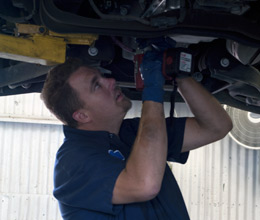
Because sound and vibration travel through a vehicle’s frame, guessing the location of a clunk often leads to replacing functional parts needlessly. At All Around Auto Repair, technicians road-test your vehicle, isolate the exact moment the noise occurs, and inspect engine mounts, CV joints, driveshaft play, differentials, and suspension bushings to find the true source.
Final Thoughts
If your car makes a clunk when you accelerate or let off the gas, don’t ignore it as a harmless sign of age. Worn engine mounts, failing U-joints, excessive differential play, or loose suspension components can cause progressive damage to surrounding systems if left unaddressed.
If your vehicle has developed a new clunk during acceleration or deceleration, feel free to contact our expert team at All Around Auto Repair and schedule an inspection today!
📞 (707) 837-0646
📍 1244 Central Ave, Santa Rosa, CA 95401
🌐 allaroundautorepair.com
All Around Auto Repair – Repair. Maintenance. Service. Since 2001.