
Buying a used car can be exciting, but it can also be incredibly risky. The vehicle looks clean, the seller says it runs great, and the short test drive seems perfectly normal. For many buyers, that’s enough reassurance to move forward with the purchase. Unfortunately, some of the most expensive vehicle problems don’t reveal themselves during a 15-minute drive around town.
A vehicle can start, drive, and stop normally while hiding severe mechanical issues, safety concerns, or neglected maintenance that could cost thousands of dollars after the sale is complete. That’s why a professional pre-purchase inspection is one of the smartest investments a used car buyer can make before signing the title over.
Most buyers focus on what they can immediately see, hear, and feel. Does the engine sound normal? Does the transmission shift smoothly? Are there any warning lights on the dashboard? While these are important observations, they only reveal part of the vehicle’s true condition. Components can be heavily worn, structurally damaged, leaking, or improperly repaired without creating obvious symptoms during a brief drive.

Masked Engine Seepage and Thermal Failure Risks
One of the biggest risks when purchasing a used vehicle is undiscovered engine wear. An engine may appear healthy today, but early signs of trouble can often be detected long before major symptoms develop. Technicians commonly inspect for internal oil leaks, cooling system seeps, fluid contamination, and signs of past overheating.
For example, a seller may clean the engine compartment thoroughly before listing the vehicle for sale. To an untrained eye, everything looks spotless. However, experienced technicians know how to spot fresh chemical wash residue, unmask hidden oil dampness beneath the block, and track weak water pumps or failing thermostats. Catching these hidden fluid issues early through an expert auto inspections sequence protects you from buying someone else’s expensive headache.
Transmission and drivetrain repairs are among the most expensive issues a driver can face. While a gearbox might shift adequately under light acceleration, a professional inspection can uncover burnt or contaminated fluid, delayed hydraulic clutch engagement, or early signs of internal gear wear. Technical diagnostic manuals published by SAE International outline that slight delays in electronic solenoid engagement cycles are early indicators of total transmission valve body failure, long before the driver feels a heavy physical slip or clunk.

Chassis Binding, Hidden Runout, and Cleared DTC Monitors
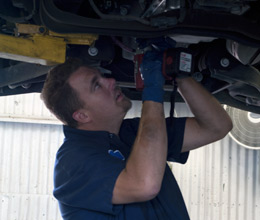
A used vehicle may feel stable over flat roads while hiding severely deteriorated steering and suspension components. Parts such as ball joints, tie rod ends, control arm bushings, shocks, and struts wear down gradually. During an inspection, the vehicle is lifted to check for unsealed boots or loose links that compromise highway stability, steering response, and tire wear. Brakes also deserve a closer look; pads can have just a millimeter of friction material remaining while still providing acceptable stopping power during a gentle test drive, meaning a comprehensive brake repair and safety assessment might be needed immediately after purchase.
Today’s vehicles rely heavily on complex control modules. Many active electronic or emissions issues won’t be visible during a test drive if the seller has recently disconnected the battery or manually cleared the dashboard lights. Running a comprehensive computerized scan tool reveals pending trouble codes and incomplete readiness monitors. Industry safety briefs managed by the ASE (National Institute for Automotive Service Excellence) confirm that a scan tool can catch latent oxygen sensor tracking errors and EVAP system leaks that are simply waiting for a few driving cycles to re-illuminate the Check Engine Light.
Previous accident damage is another crucial factor. A car can be cosmetically repaired with fresh paint and body filler while hiding structural frame deformation underneath. Technicians inspect the chassis welds, looking for mismatched structural panels, suspension tracking irregularities, or frame straightening marks. These underlying issues permanently damage the car’s structural integrity and impact your safety in a future collision.

Tire Tread Clues and Uncovering Neglected Service History
Tires tell an incredibly detailed story about a vehicle’s history. Abnormal or uneven tread wear patterns frequently reveal deep-seated mechanical play that extends far beyond the rubber itself, pinpointing bent control arms, a sagging suspension, or a severely unaligned front end. Furthermore, checking the physical state of the fluids, cabin filters, and spark plugs reveals if the previous owner followed a strict maintenance plan or simply practiced deferred care. Consumer used-car data published by Consumer Reports demonstrates that vehicles with a documented history of delayed maintenance intervals suffer twice the rate of secondary component breakdown, making a pre-purchase checklist a vital financial shield.
Not every inspection uncovers major, catastrophic problems. In many cases, the vehicle may turn out to be in excellent condition. Even then, the evaluation provides an invaluable itemized list of upcoming maintenance needs, helping you budget realistically for future brake pads, tires, or belt services. It also provides objective leverage during price negotiations if minor repairs are found. The ultimate goal isn’t necessarily to walk away from the car—it is to ensure you know exactly what you are paying for.
At All Around Auto Repair, our pre-purchase inspections combine modern electronic diagnostics with a meticulous hands-on physical checklist. We evaluate the engine block, transmission response, braking system, steering tracking, and chassis integrity to provide an honest, accurate picture of the car’s overall health. Investing in an inspection before you sign the final paperwork replaces uncertainty with facts, offering the protection and peace of mind you deserve.
If you’re considering buying a used vehicle, don’t rely solely on a shiny exterior or a quick drive. Let our experienced technicians inspect your potential investment to ensure it is safe, reliable, and truly worth the asking price.
To schedule a comprehensive professional pre-purchase inspection or a complete electronic systems scan, please contact All Around Auto Repair today.
📞 (707) 837-0646
📍 1244 Central Ave, Santa Rosa, CA 95401
All Around Auto Repair – Repair. Maintenance. Service. Since 2001.